Our friends, Don & Janice, introduced us to the Colombia Gorge last summer. Although we enjoyed it, we barely scratched the surface on that trip with regard to the spectacular scenery. The gorge is about 20 miles long and is located almost within sight of Portland, OR.
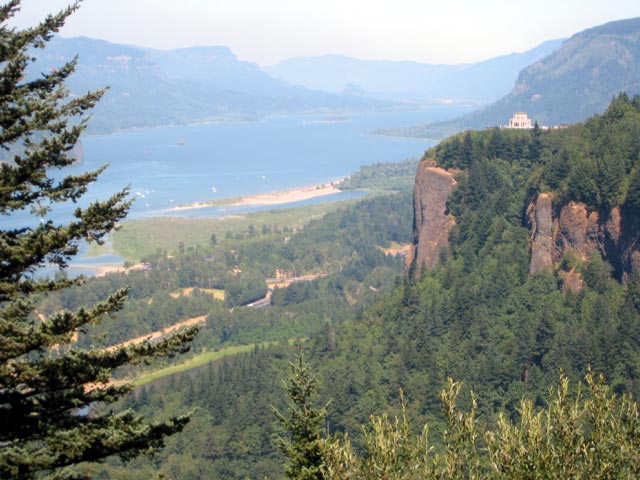 At
first glance, the Colombia doesn't look like a gorge in the sense of the Grand
Canyon. You might not have thought much about it, but only TWO rivers drain
the western slop of the Continental Divide into the Pacific Ocean: the Colorado
and the Colombia. Remember the Ice Age flood(s) that we described in our Washington
section as having gouged out the Grand Coulee? Well those waters also passed
through the Colombia Gorge and cut the center of it down so quickly that it
left the side streams in hanging valleys
that run to the edge then fall off the high basalt cliffs.
At
first glance, the Colombia doesn't look like a gorge in the sense of the Grand
Canyon. You might not have thought much about it, but only TWO rivers drain
the western slop of the Continental Divide into the Pacific Ocean: the Colorado
and the Colombia. Remember the Ice Age flood(s) that we described in our Washington
section as having gouged out the Grand Coulee? Well those waters also passed
through the Colombia Gorge and cut the center of it down so quickly that it
left the side streams in hanging valleys
that run to the edge then fall off the high basalt cliffs.
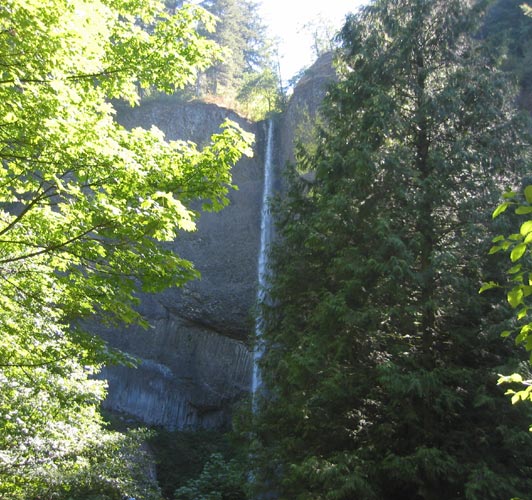
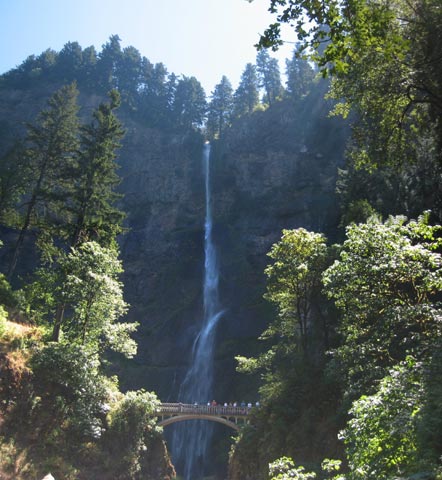 According
to the tourist brochures, there are more high waterfalls here than anywhere
else in North America (see our compendium of waterfall
photos). The biggest is Multnoma Falls; at 620' it is second highest after
Yosemite Falls. In addition, we visited at least 6 that were more than 200',
and another half dozen that were more than 100' high. Almost all are located
on the Oregon side of the river, on the flanks of Mount
Hood which has ample snow cover to keep them running at full speed throughout
the summer.
According
to the tourist brochures, there are more high waterfalls here than anywhere
else in North America (see our compendium of waterfall
photos). The biggest is Multnoma Falls; at 620' it is second highest after
Yosemite Falls. In addition, we visited at least 6 that were more than 200',
and another half dozen that were more than 100' high. Almost all are located
on the Oregon side of the river, on the flanks of Mount
Hood which has ample snow cover to keep them running at full speed throughout
the summer.
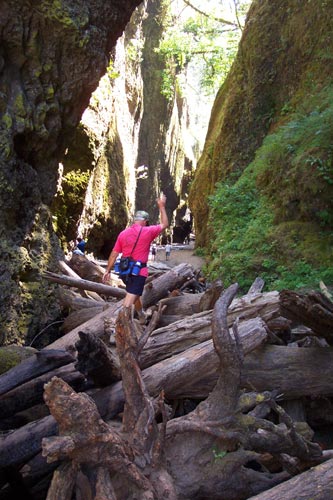
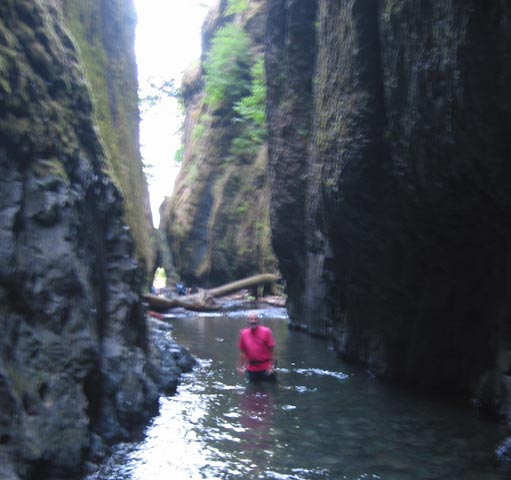
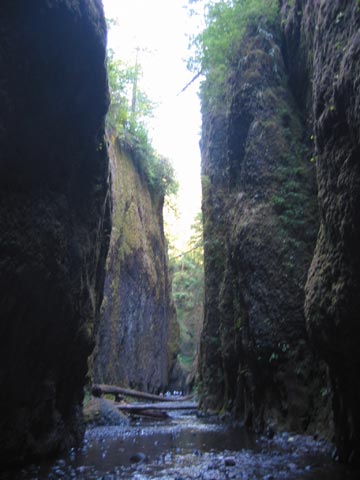 Oneonta
Falls cuts a long narrow gorge of its own through the basalt. It looks like
a Utah slot canyon covered with moss. Near the mouth of the canyon a log jam
makes for a tricky entrance. And once you're in,
you still have to navigate through waist deep water
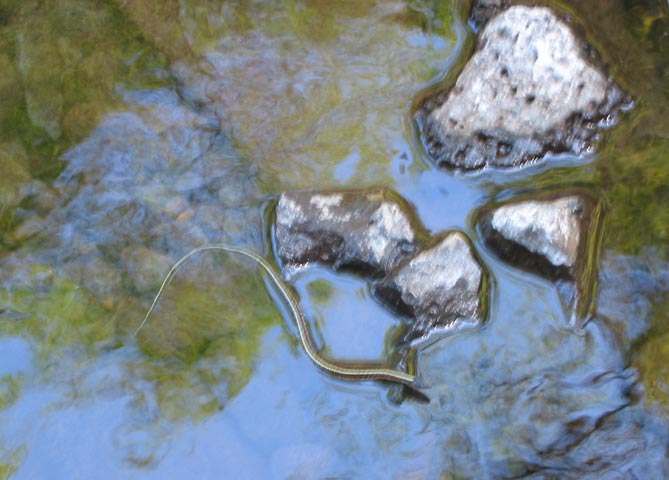
to get to the falls. Next (with any luck) you run into the resident water
snake (ours was having a bit of trouble swimming against the current).
How we missed this hike last year is beyond me! We spent eight days in the
gorge and still left without seeing four of the falls on "our list".
We'll be baaack!
Oneonta
Falls cuts a long narrow gorge of its own through the basalt. It looks like
a Utah slot canyon covered with moss. Near the mouth of the canyon a log jam
makes for a tricky entrance. And once you're in,
you still have to navigate through waist deep water
to get to the falls. Next (with any luck) you run into the resident water
snake (ours was having a bit of trouble swimming against the current).
How we missed this hike last year is beyond me! We spent eight days in the
gorge and still left without seeing four of the falls on "our list".
We'll be baaack!
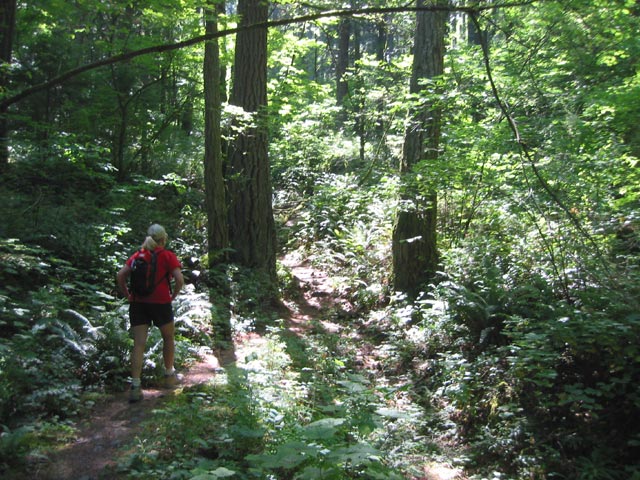 There
are a number of excellent hiking trails in the gorge. All are through the
jungle (temperate rain forest) and NONE are flat. The banks are quite steep
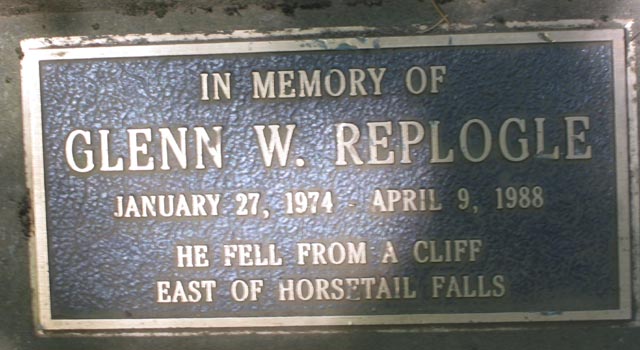
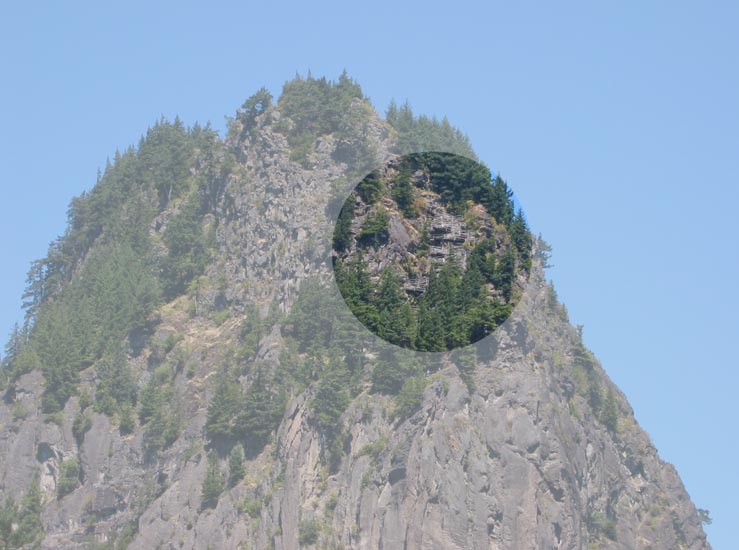
and we ran across a private memorial to a young guy
who was probably doing what any 14 (or 60) year old would do.
There
are a number of excellent hiking trails in the gorge. All are through the
jungle (temperate rain forest) and NONE are flat. The banks are quite steep
and we ran across a private memorial to a young guy
who was probably doing what any 14 (or 60) year old would do.
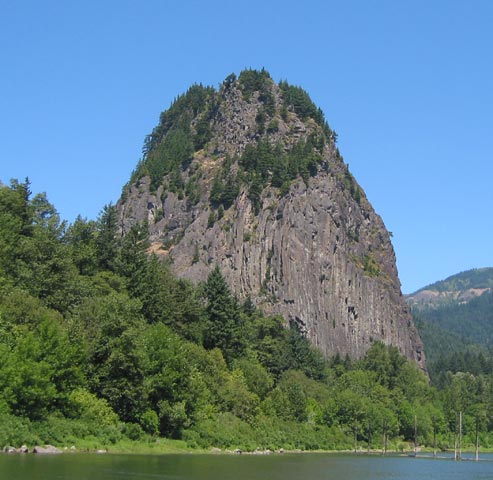 At
the edge of the river, rising over 800', is Beacon Rock, the second largest
monolith in the northern hemisphere (the Rock of Gibraltar is bigger). There
is a trail to the top that the travel guides describe as "like climbing
a scaffold to the top of an 80 story building".
Although it was very interesting, the trail turned
out to be quite tame; 800' gain in 1 mile is not real steep and there is a
railing all the way.
At
the edge of the river, rising over 800', is Beacon Rock, the second largest
monolith in the northern hemisphere (the Rock of Gibraltar is bigger). There
is a trail to the top that the travel guides describe as "like climbing
a scaffold to the top of an 80 story building".
Although it was very interesting, the trail turned
out to be quite tame; 800' gain in 1 mile is not real steep and there is a
railing all the way.
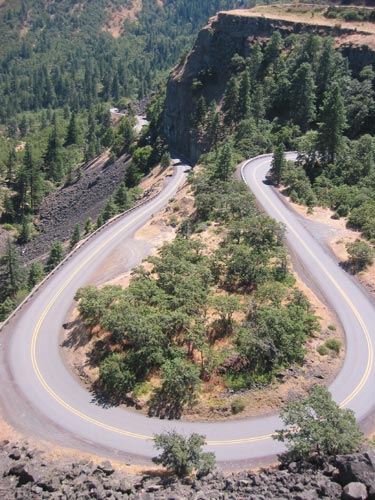 The
scenic Colombia River Highway passes through the gorge. It claims to be the
first in America to be designed specifically for use as a "scenic highway".
It opened in sections between 1915 and 1923 and runs from Troutdale (about
15 miles east of Portland) to The Dalles. The railroad already followed that
route and owned the right-of-way, so the highway had to be built higher on
the cliffs. This just made it all the more scenic.
The
scenic Colombia River Highway passes through the gorge. It claims to be the
first in America to be designed specifically for use as a "scenic highway".
It opened in sections between 1915 and 1923 and runs from Troutdale (about
15 miles east of Portland) to The Dalles. The railroad already followed that
route and owned the right-of-way, so the highway had to be built higher on
the cliffs. This just made it all the more scenic.
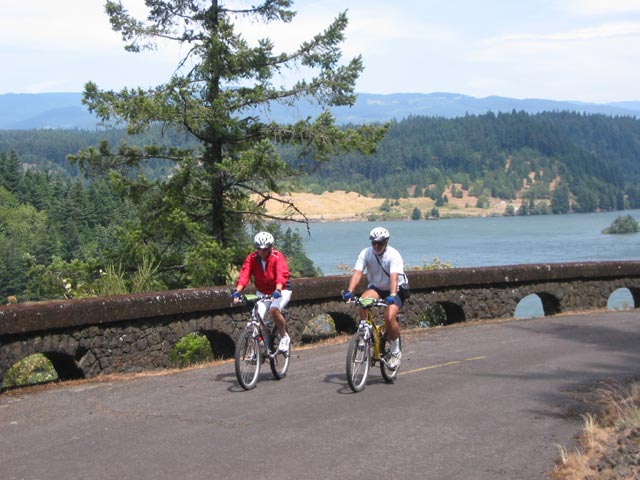 The
old highway was replaced by an Interstate in the 1960's. However, portions
of it have been preserved; some sections allow cars and some are for bicycles
only. The "car" portion is MUCH too narrow for safe biking (there's
no way I'd pull our trailer over that road either!). We contented ourselves
to riding both of the 5-mile bikes-only sections and cursed the railroad for
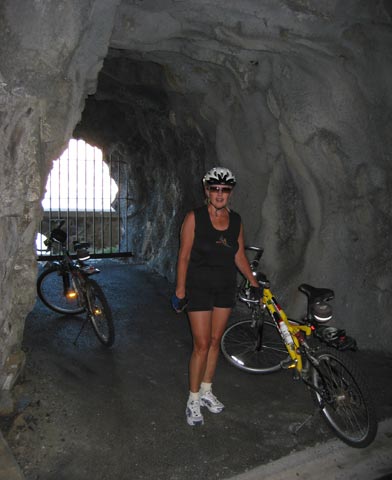
not letting the road-builders follow that nice FLAT right-of-way. The bike
route passes through twin tunnels that were built with windows
like the Zion tunnel. Apparently the traffic was sparse enough in those days
to allow people to pull over to admire the views from inside the tunnel.
The
old highway was replaced by an Interstate in the 1960's. However, portions
of it have been preserved; some sections allow cars and some are for bicycles
only. The "car" portion is MUCH too narrow for safe biking (there's
no way I'd pull our trailer over that road either!). We contented ourselves
to riding both of the 5-mile bikes-only sections and cursed the railroad for
not letting the road-builders follow that nice FLAT right-of-way. The bike
route passes through twin tunnels that were built with windows
like the Zion tunnel. Apparently the traffic was sparse enough in those days
to allow people to pull over to admire the views from inside the tunnel.
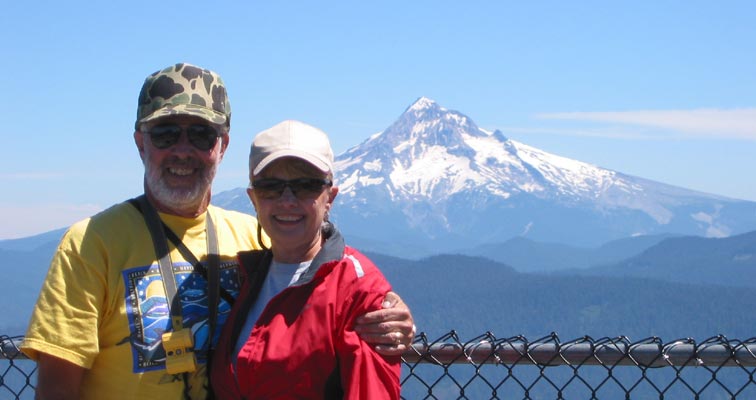
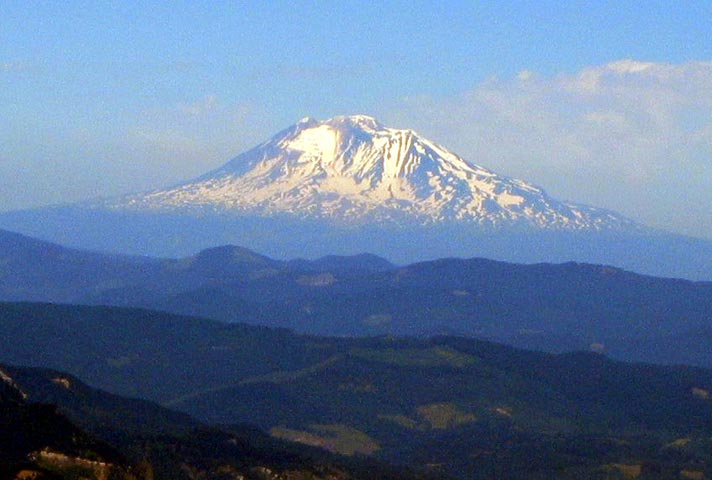
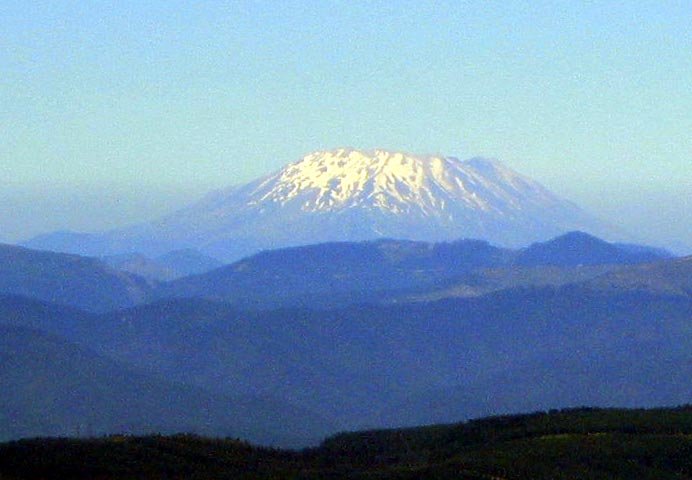
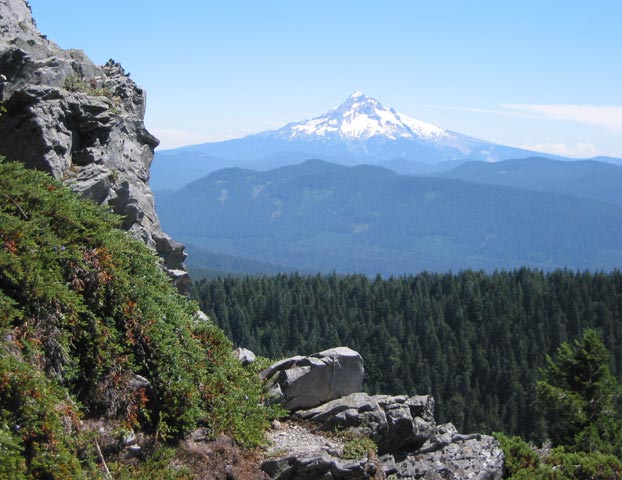 We
found only one road leading to the top of the gorge. It led to an overlook
4,200' above river level and offered views of the major volcanic peaks in
the area. In addition to nearby Mount Hood, both Mount
Adams and the unmistakable profile of Mount Saint
Helens (with its top blown off) could be seen in the distance.
We
found only one road leading to the top of the gorge. It led to an overlook
4,200' above river level and offered views of the major volcanic peaks in
the area. In addition to nearby Mount Hood, both Mount
Adams and the unmistakable profile of Mount Saint
Helens (with its top blown off) could be seen in the distance.
Having been raised on the other side of the country, we were surprised to find a number of things in the Colombia Gorge road that struck a familiar chord:
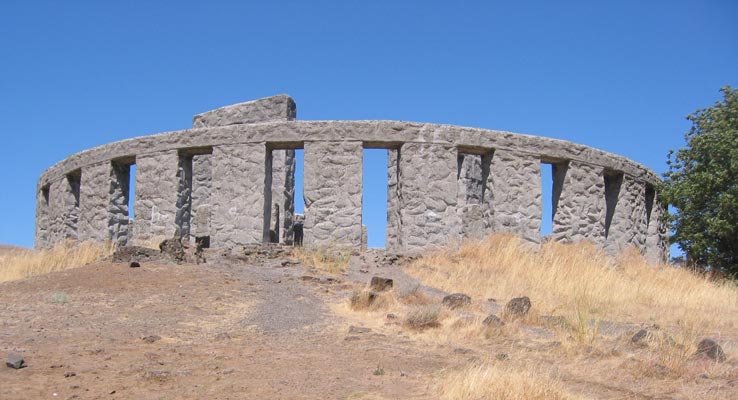
- One of the primary builders of the road was a guy named Sam Hill. He was a pacifist Quaker who spent his own money to build a WWI memorial to local boys killed in that conflict. The memorial is a full size replica of Stonehenge (as it would have looked when it was new). His name shows up often in the gorge. My Dad never swore and would say things like "What the Sam Hill is this?" I wonder if Sam's popularity extended "back east".
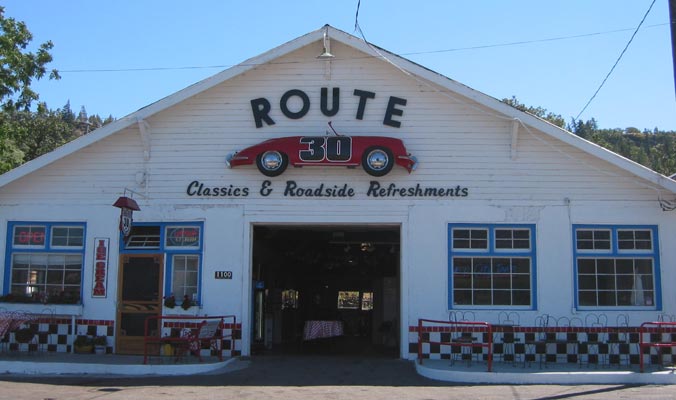
- The Columbia Gorge highway is designated US-30. The hype relating to Route 66 (the Mother Road) and Route 22 (the Lincoln Highway), got me thinking about the two transcontinental highways passing near the town where I grew up: Route-22 which ends in San Francisco, and Route-30 which, as I now see, ends in Astoria, Oregon. The US highway system at that time was a collection of existing roads that plotted a course across the country. I can see the benefit in plotting a route to San Francisco, but to Astoria?
 Home Page