We had tentative plans to drive across our state (Nevada) and were awaiting the coin flip to decide whether to take US-50 (Loneliest Road in America) or I-80 to follow the pioneer's route along the Humbolt river. We have friends who were going to be staying at Lake Tahoe and we planned to stop by. Our friends weren't available so we let the coin toss decide west or north.
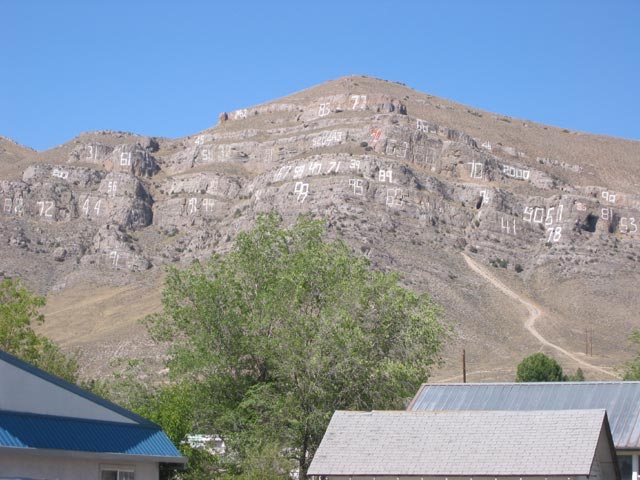 We
ended up going north and spending several days in Arco, ID (whose main claim
to fame is Number Rock where every high school class since 1920 has
put their mark on the ridge above town). We found a really nice RV park with
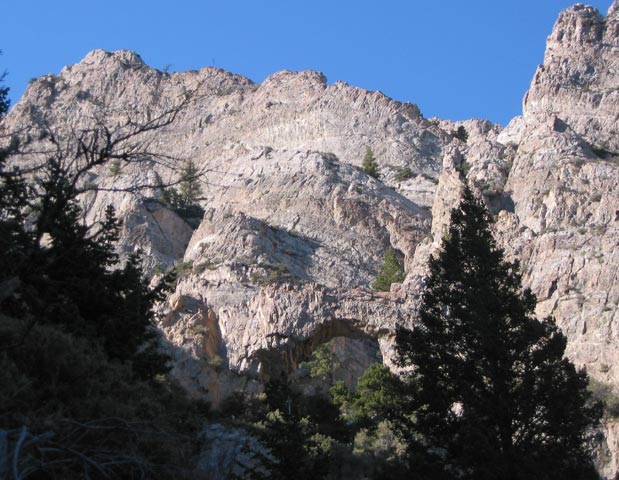
super friendly owners. The town is named for an 80' natural arch that no one
in town knew exactly how to find. The town brochure gave very scant directions
and warned that it was "several miles from town" along "unimproved
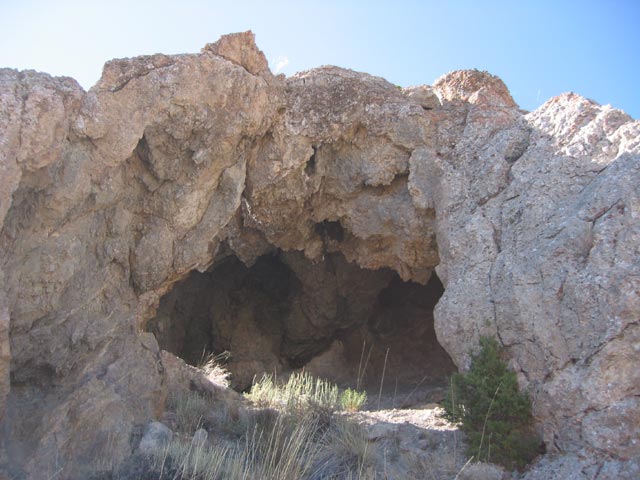
roads". The concept appealed to us and we went searching. We didn't know
exactly what we were looking for, so when we spotted a shadow
high on a hill, we hiked up to see. False alarm!
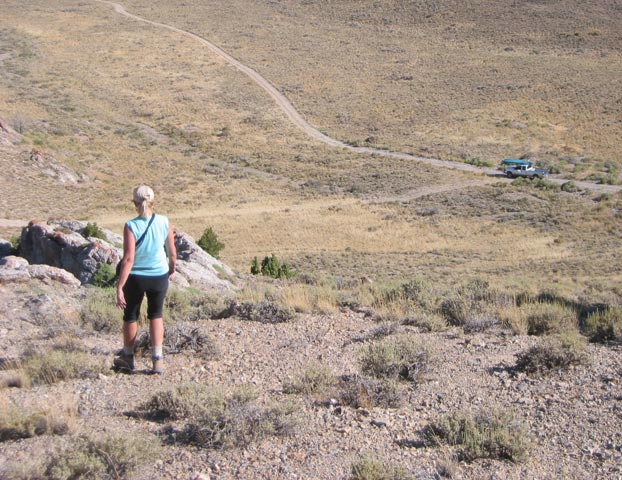
The real arch was considerably higher into the
hills. We found it 11 dirt-road miles from town followed by a steep 600' hike
(in 1/2 mile, including 180 steps) just to get within viewing distance.
We
ended up going north and spending several days in Arco, ID (whose main claim
to fame is Number Rock where every high school class since 1920 has
put their mark on the ridge above town). We found a really nice RV park with
super friendly owners. The town is named for an 80' natural arch that no one
in town knew exactly how to find. The town brochure gave very scant directions
and warned that it was "several miles from town" along "unimproved
roads". The concept appealed to us and we went searching. We didn't know
exactly what we were looking for, so when we spotted a shadow
high on a hill, we hiked up to see. False alarm!
The real arch was considerably higher into the
hills. We found it 11 dirt-road miles from town followed by a steep 600' hike
(in 1/2 mile, including 180 steps) just to get within viewing distance.
 This
area is truly REMOTE. Another claim to fame for Arco, ID is that it was the
first city to be lit by atomic power (I'm surprised that they had electricity
at all before that). A few miles out of town is the worlds first nuclear power
plant. They conduct tours of the 1950's era
facility and the young guy who conducted ours was outstanding. Because of
the concern in Las Vegas over the storage of nuclear waste in Yucca Mountain,
I was really surprised to learn how blown out of proportion that whole thing
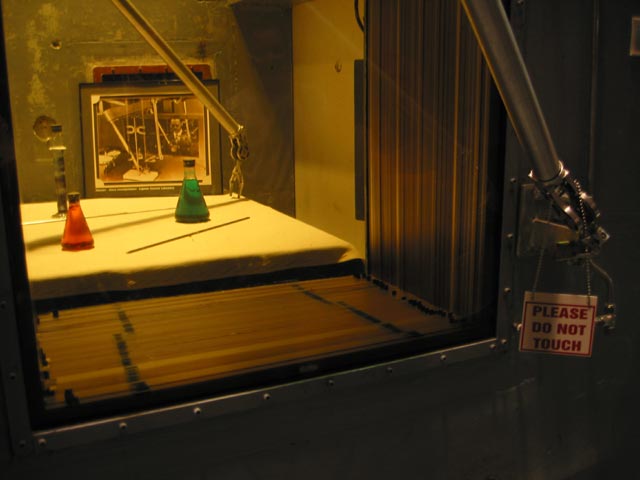
might be. The material that they were working with was (safely) shielded behind
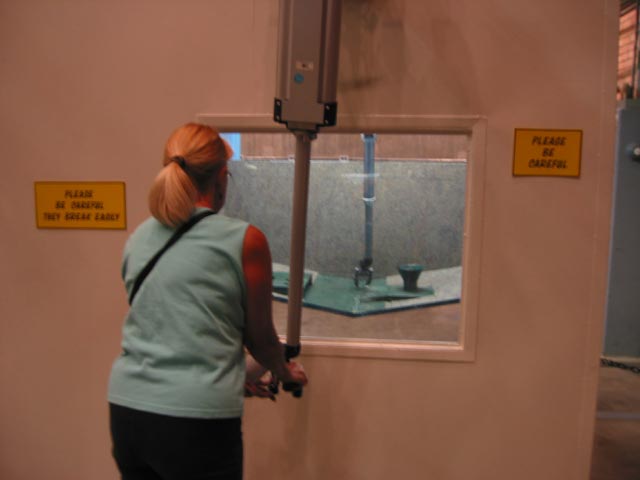
40 plates of leaded glass and it was interesting
to see how clearly you could see through them. Patty impressed us all with
her ability to operate the mechanical hand.
This
area is truly REMOTE. Another claim to fame for Arco, ID is that it was the
first city to be lit by atomic power (I'm surprised that they had electricity
at all before that). A few miles out of town is the worlds first nuclear power
plant. They conduct tours of the 1950's era
facility and the young guy who conducted ours was outstanding. Because of
the concern in Las Vegas over the storage of nuclear waste in Yucca Mountain,
I was really surprised to learn how blown out of proportion that whole thing
might be. The material that they were working with was (safely) shielded behind
40 plates of leaded glass and it was interesting
to see how clearly you could see through them. Patty impressed us all with
her ability to operate the mechanical hand.
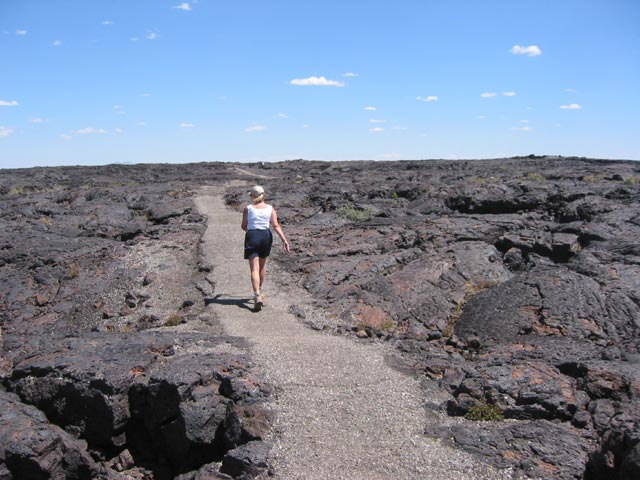
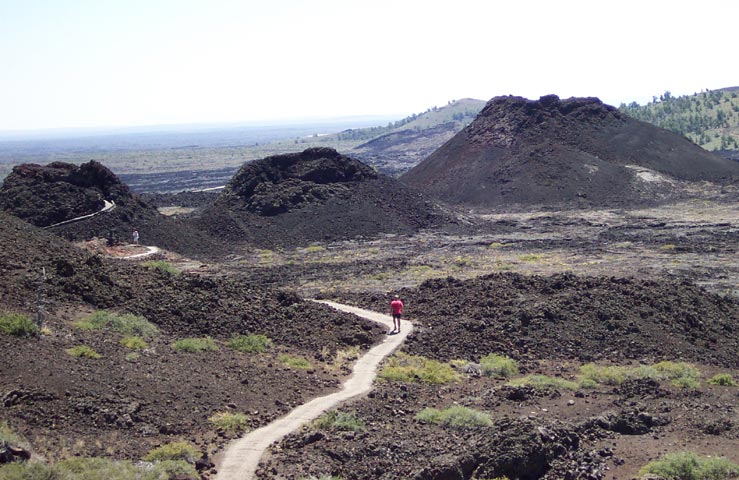 The
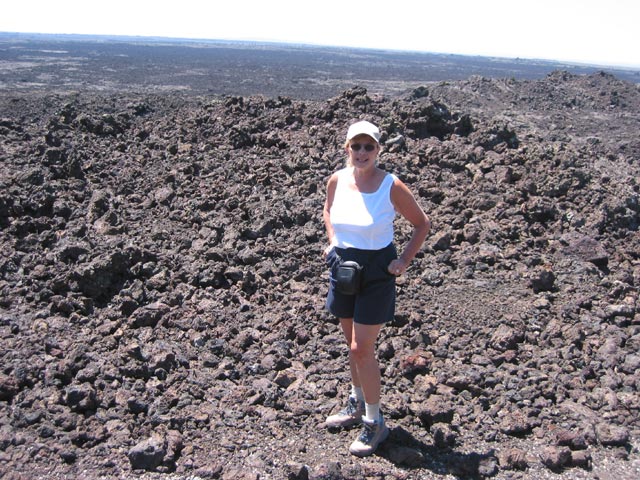
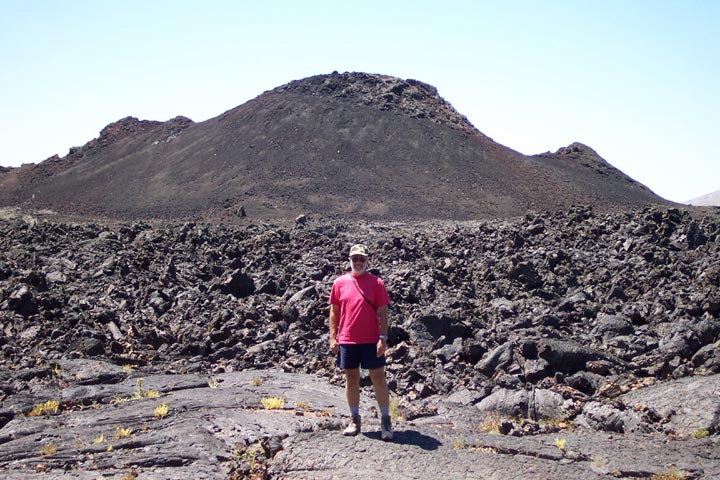
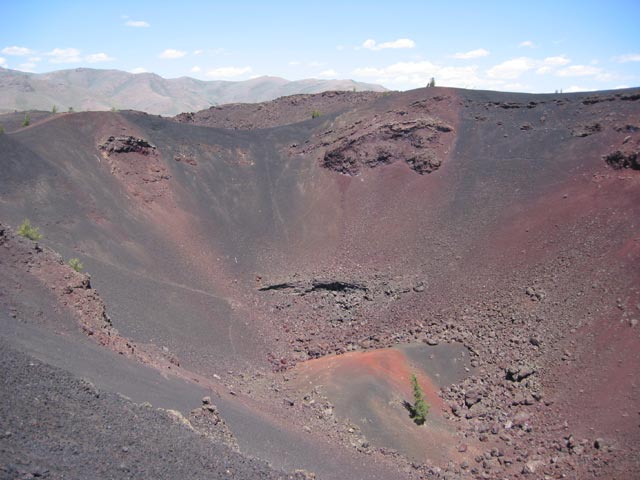
real reason we chose Arco, ID was its proximity to Craters of the Moon National
Monument. A number of relatively recent lava flows cover a huge area with
impassable lava fields and cinder
cones. The walkways take you to the top of craters,
passing through both types of lava: aa is the
chunky stuff and pahoihoi is the (comparatively)
smooth type. Of course, there were a number of decent lava
tubes for us to explore.
The
real reason we chose Arco, ID was its proximity to Craters of the Moon National
Monument. A number of relatively recent lava flows cover a huge area with
impassable lava fields and cinder
cones. The walkways take you to the top of craters,
passing through both types of lava: aa is the
chunky stuff and pahoihoi is the (comparatively)
smooth type. Of course, there were a number of decent lava
tubes for us to explore.
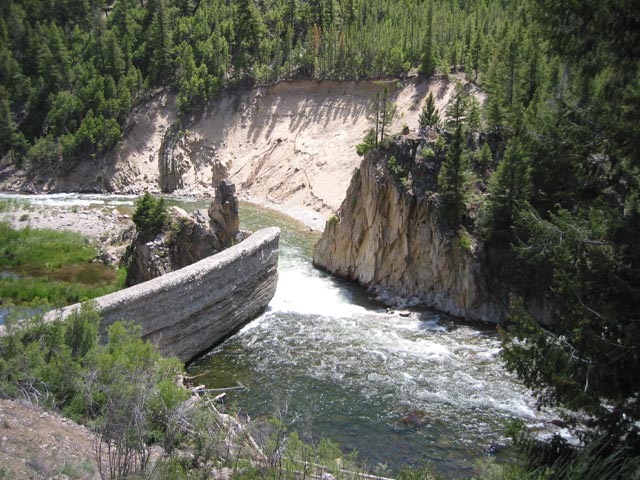
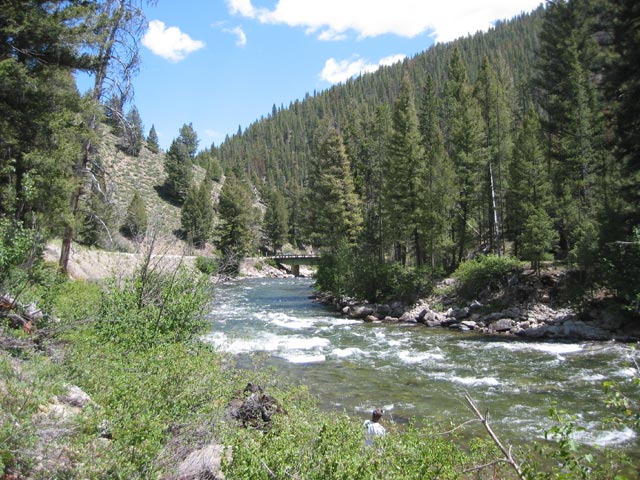 We
also took a 200 mile side trip over another one of the top 10 scenic drives
in America. The Sawtooth Wilderness area follows the Salmon river from its
headwaters, through the first of its many canyons. As you might have guessed,
this area is still geologically active. We stopped at several hot
springs right along side of the road on the river bank. The Salmon is
claimed to be the Nation's longest free-flowing river. We saw where one of
the old miner's dams had been dynamited by the
environmentalists years ago.
We
also took a 200 mile side trip over another one of the top 10 scenic drives
in America. The Sawtooth Wilderness area follows the Salmon river from its
headwaters, through the first of its many canyons. As you might have guessed,
this area is still geologically active. We stopped at several hot
springs right along side of the road on the river bank. The Salmon is
claimed to be the Nation's longest free-flowing river. We saw where one of
the old miner's dams had been dynamited by the
environmentalists years ago.
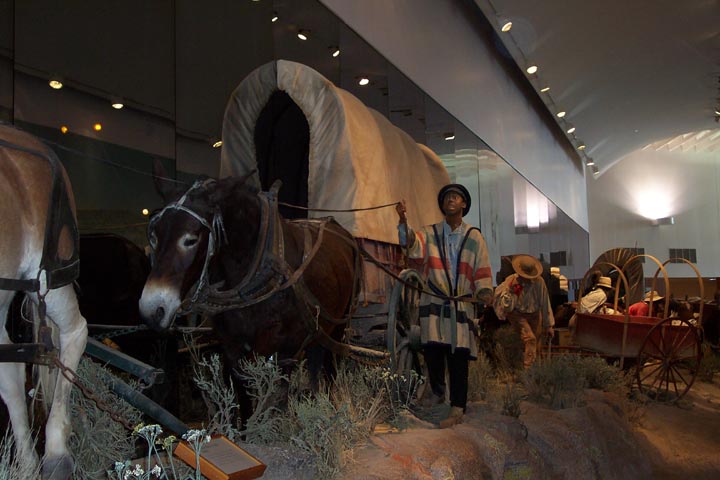
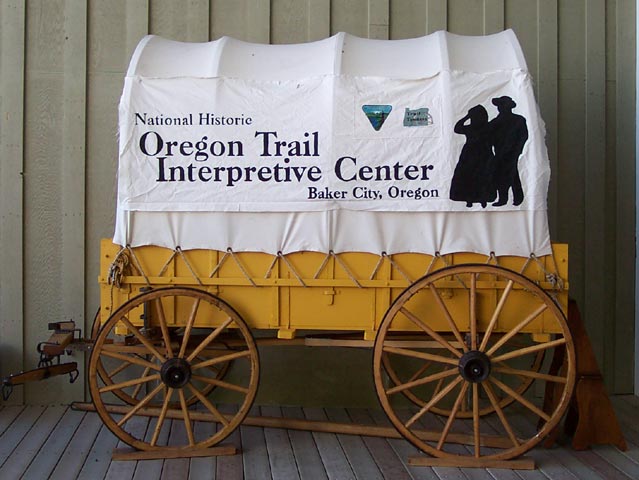 We
left Idaho following the Oregon Trail across the HOT and dry Snake River plane.
Our destination was Baker City, OR where the National Park Service operates
a terrific visitor center with huge dioramas telling
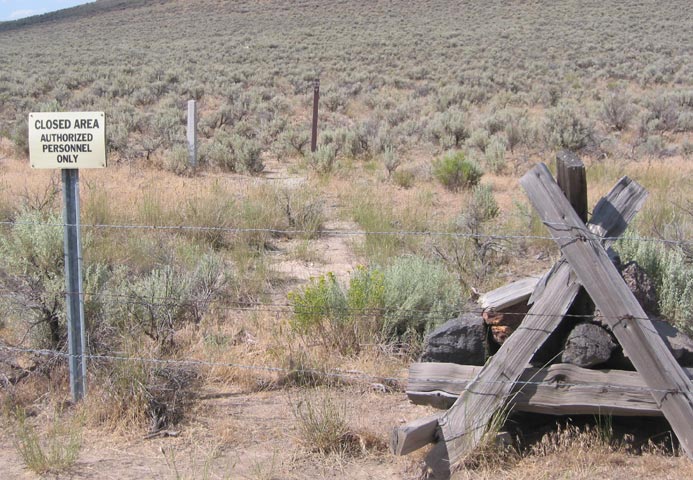
the story. The old wagon ruts are still visible
in many places. Not surprisingly, we chose some that were behind a do
not enter sign where the Park service had built a cairn structure
that helped us get over the barbed wire.
We
left Idaho following the Oregon Trail across the HOT and dry Snake River plane.
Our destination was Baker City, OR where the National Park Service operates
a terrific visitor center with huge dioramas telling
the story. The old wagon ruts are still visible
in many places. Not surprisingly, we chose some that were behind a do
not enter sign where the Park service had built a cairn structure
that helped us get over the barbed wire.
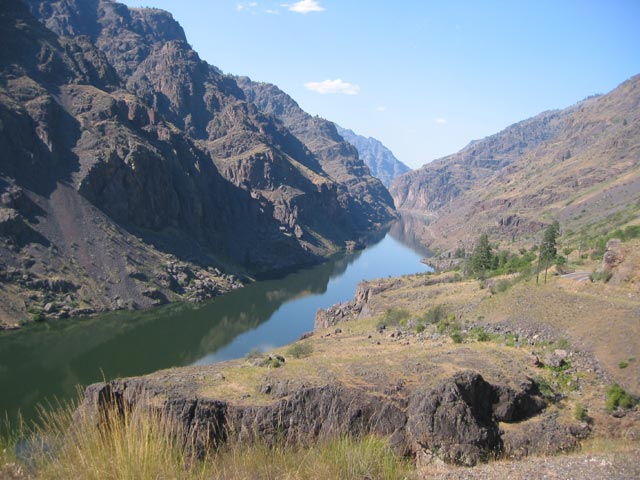
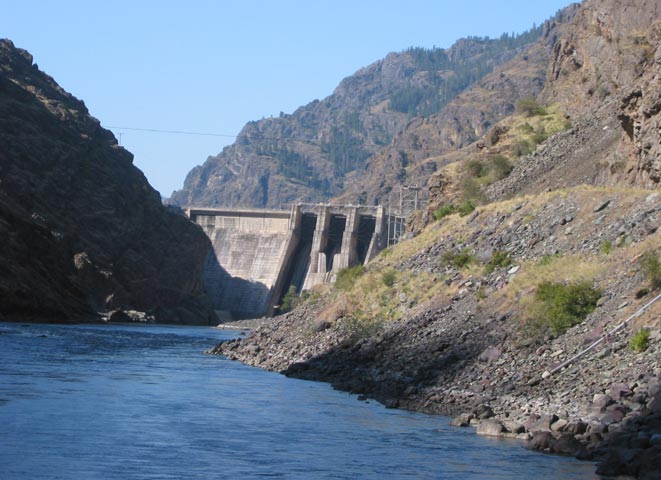
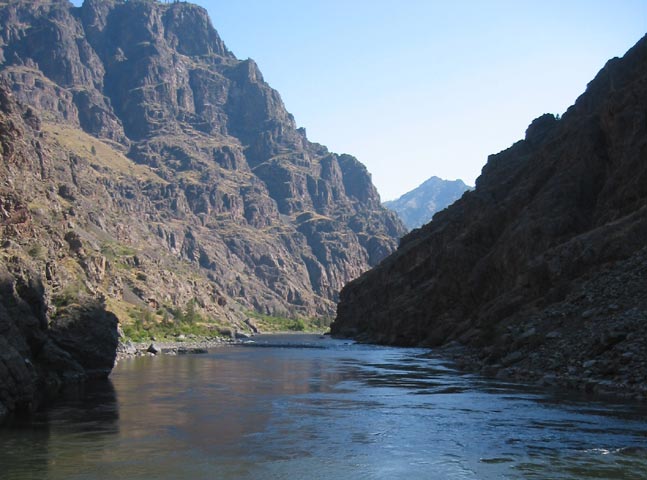 We
took a long day trip from there to see Hell's Canyon which is billed as the
"deepest river valley in the US". We're talking "river valley"
as opposed to (water-cut) "canyon". There are steep mountain ranges
on both sides of the river with peaks as much as 8,000 feet above the water.
Several dams are in the canyon but 110 miles of it remains free flowing
between Hells Canyon dam and Lewiston, ID. Because the valley is so narrow,
the lakes behind the dam don't look much different
than the river below it.
We
took a long day trip from there to see Hell's Canyon which is billed as the
"deepest river valley in the US". We're talking "river valley"
as opposed to (water-cut) "canyon". There are steep mountain ranges
on both sides of the river with peaks as much as 8,000 feet above the water.
Several dams are in the canyon but 110 miles of it remains free flowing
between Hells Canyon dam and Lewiston, ID. Because the valley is so narrow,
the lakes behind the dam don't look much different
than the river below it.
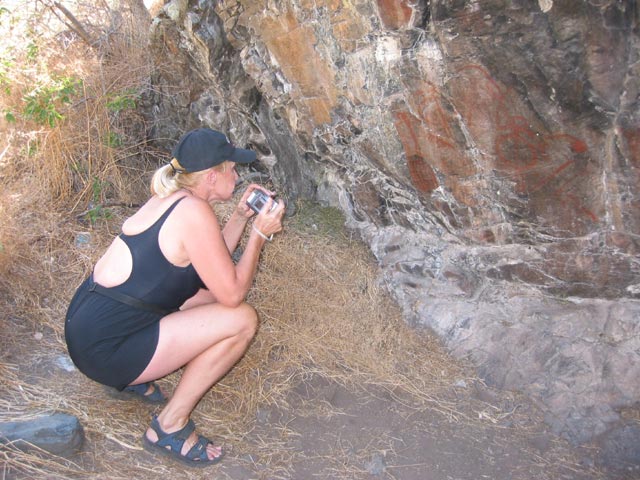
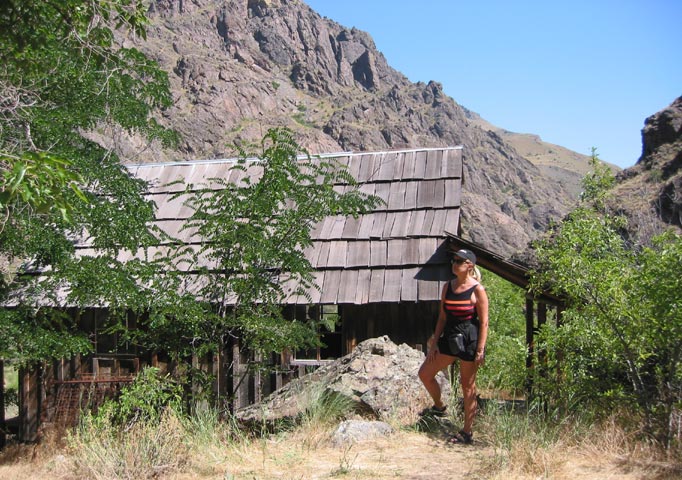
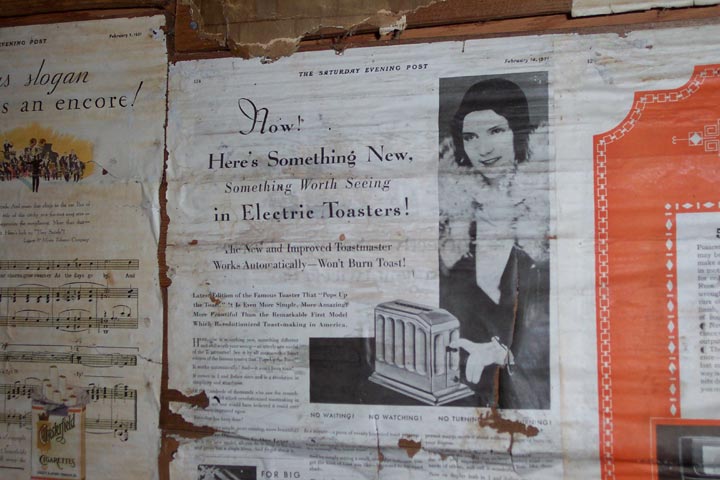
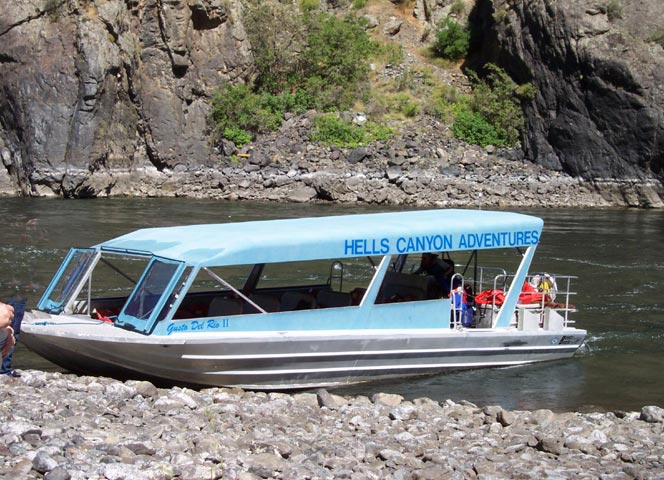 We
took a jet boat tour that went 30 miles into the deepest part of the canyon
below the dam. The boat had three Cummins V8 diesel engines, each driving
its own jet drive. That level of power was necessary to get us back UP a number
of class-3's and a few class-4 rapids (each dropping more than 15'). Shooting
big rapids is always fun, but going UP rapids was
a new thrill! (Note: we couldn't take pictures in the class 4's). The boat
ride was an all-day affair and included shore leave at ancient pictographs
and abandoned miner's cabins where they had used 1920's
magazine pages for wallpaper.
We
took a jet boat tour that went 30 miles into the deepest part of the canyon
below the dam. The boat had three Cummins V8 diesel engines, each driving
its own jet drive. That level of power was necessary to get us back UP a number
of class-3's and a few class-4 rapids (each dropping more than 15'). Shooting
big rapids is always fun, but going UP rapids was
a new thrill! (Note: we couldn't take pictures in the class 4's). The boat
ride was an all-day affair and included shore leave at ancient pictographs
and abandoned miner's cabins where they had used 1920's
magazine pages for wallpaper.
 Home Page