 The
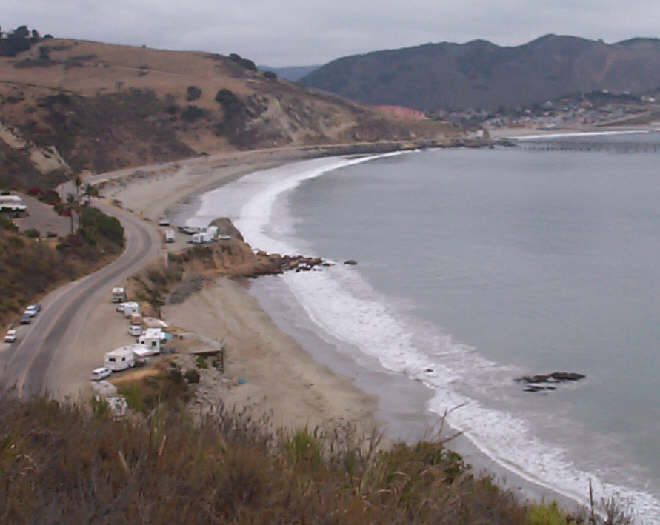
California coast has some of the best ocean kayaking spots in the US. We spent
a week at Avila Bay near San Luis Obispo. Our campsite was right at the edge
of a cliff, about 20' above the water. We launched our kayaks from a nearby
access point and paddled them to the base of the cliff below our campsite.
There they sat, chained to a rock, waiting for us to climb down and use them
every day.
The
California coast has some of the best ocean kayaking spots in the US. We spent
a week at Avila Bay near San Luis Obispo. Our campsite was right at the edge
of a cliff, about 20' above the water. We launched our kayaks from a nearby
access point and paddled them to the base of the cliff below our campsite.
There they sat, chained to a rock, waiting for us to climb down and use them
every day.
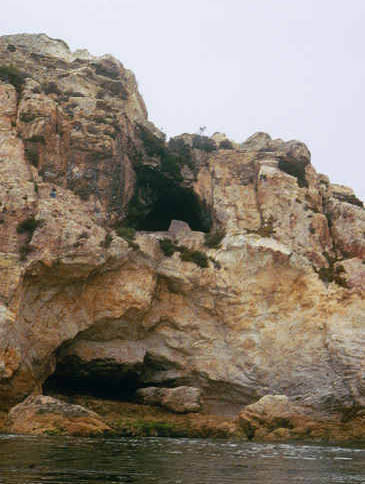
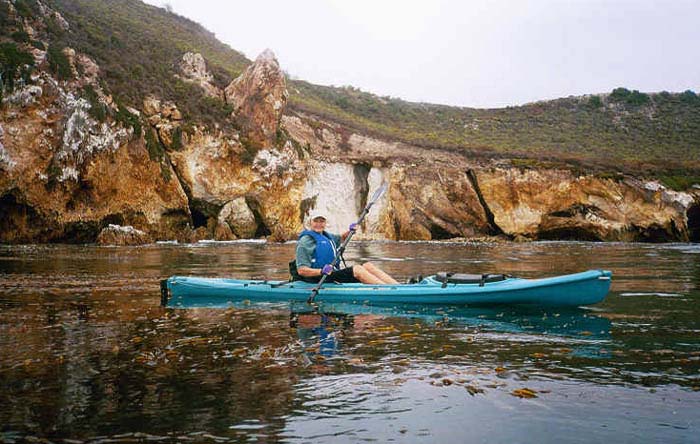
The rocky coastline south of Avila has arches, islands, and caves to explore. We paddled 3 miles down to Cave Landing (aka the nude beach) and climbed up on the cliff to check out the huge arch after which the old (1850's) landing as named. We had a couple of real nice days and one really windy one that forced us to land in HUGE surf. We both dumped and tumbled!
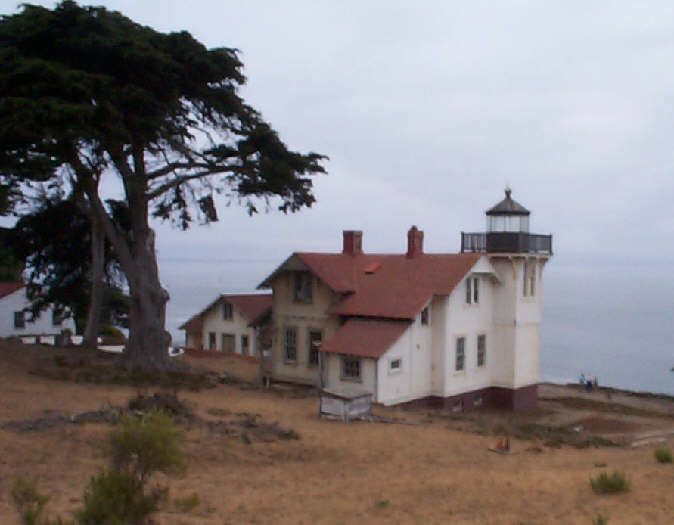 One
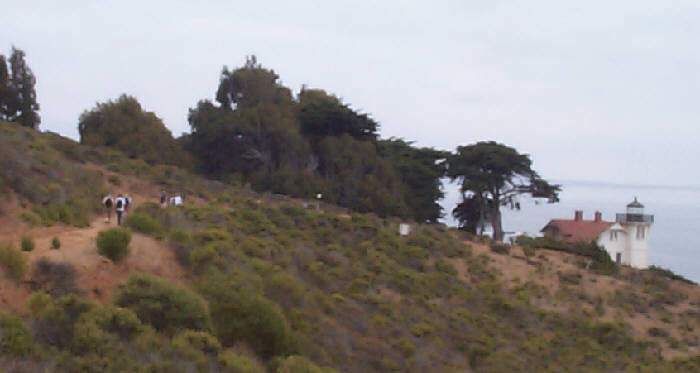
day we went on a docent-led hike to a lighthouse near
Avila Beach. The group was meeting right in the lot where we were camped,
so we joined them. Compared to the pristine lighthouses along the Oregon coast,
this one was pretty dilapidated. We made new friends and invited a group to
"our house" for beers after the hike.
One
day we went on a docent-led hike to a lighthouse near
Avila Beach. The group was meeting right in the lot where we were camped,
so we joined them. Compared to the pristine lighthouses along the Oregon coast,
this one was pretty dilapidated. We made new friends and invited a group to
"our house" for beers after the hike.
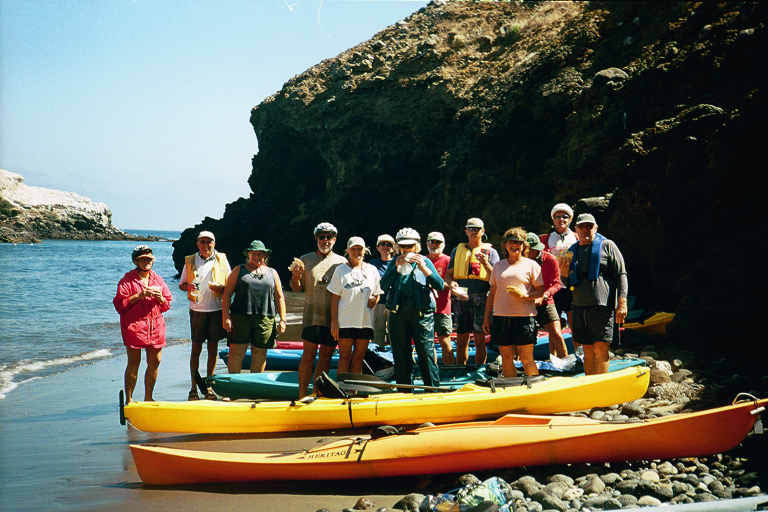
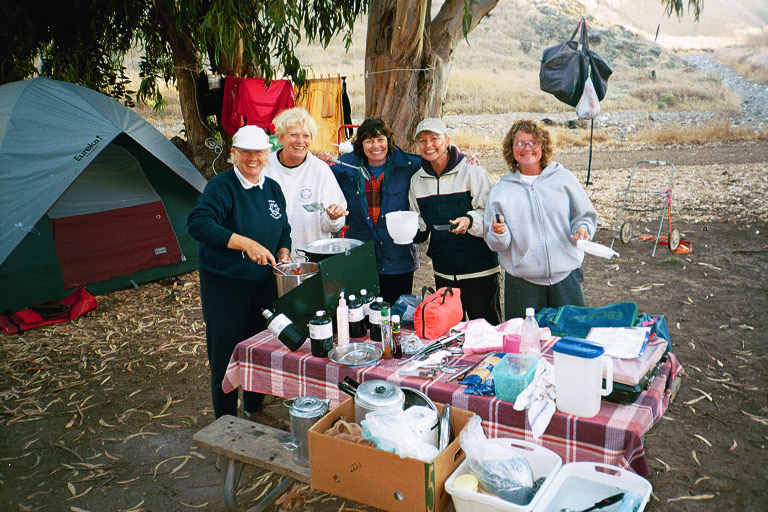
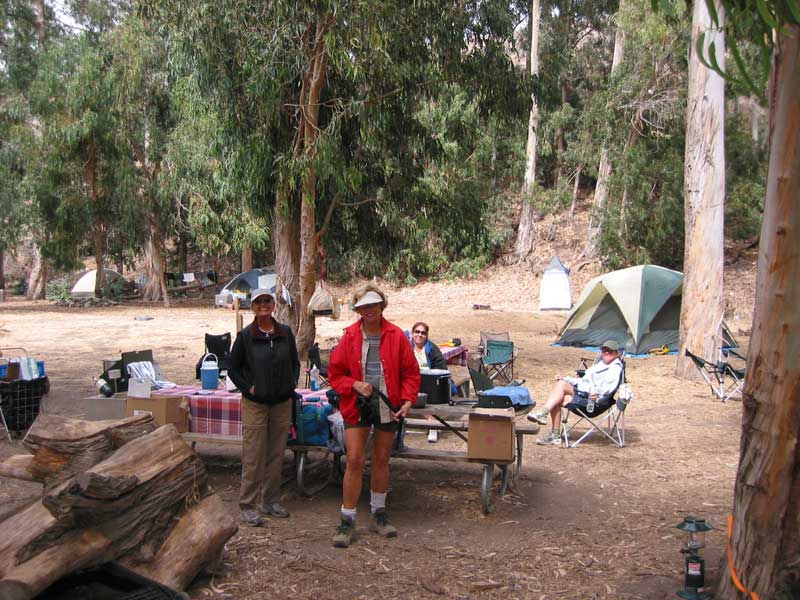
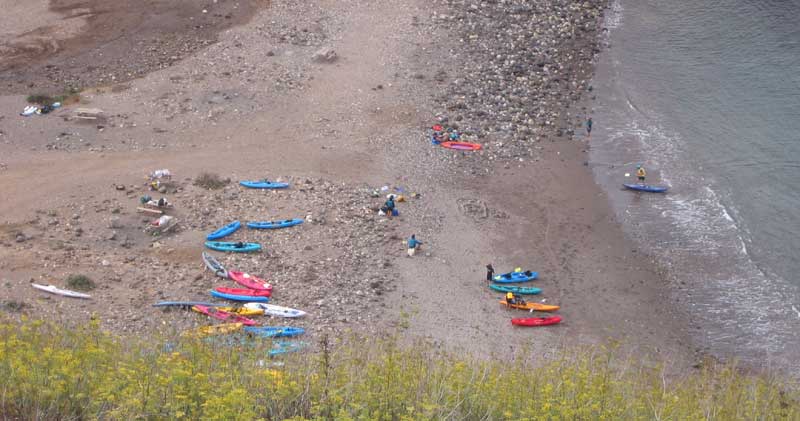
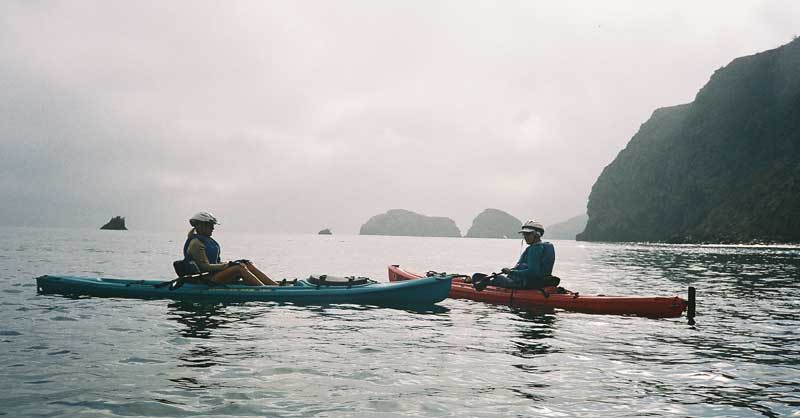
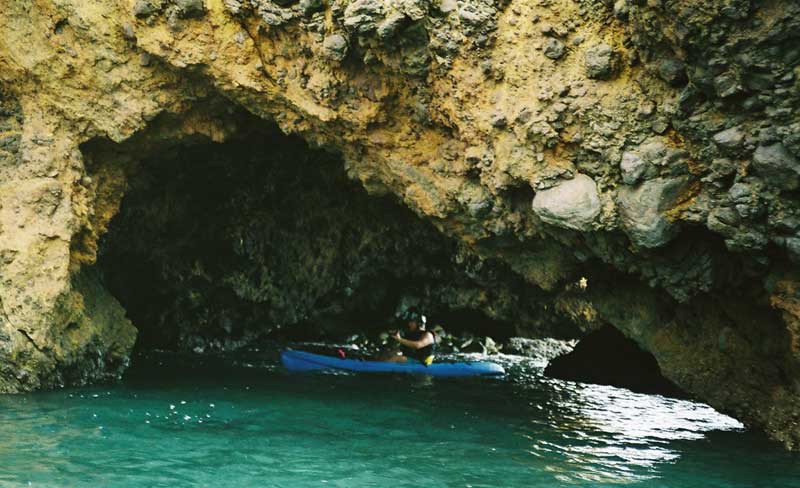
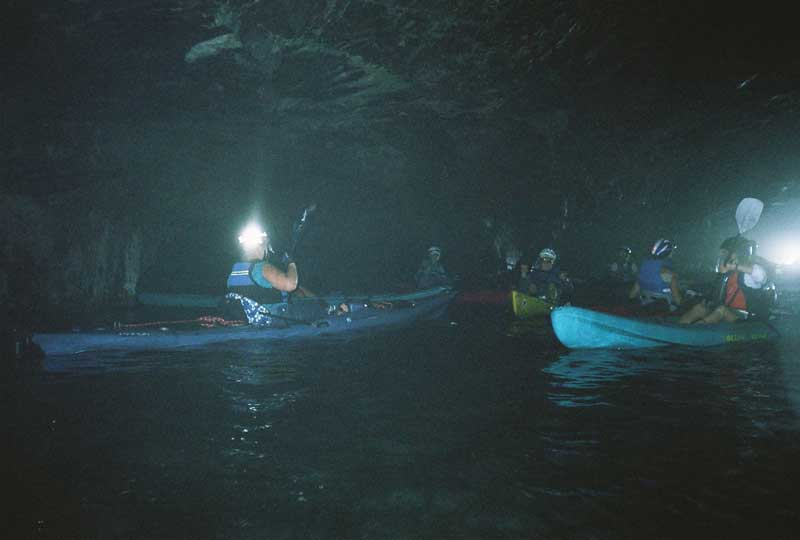
Our old cronies (youngest on this trip was >50; oldest was 81) from the Yorba Linda Polo and Yacht Club put together a 4-day kayaking trip to Santa Cruz Island. We loaded our gear and kayaks onto a big boat to make the 1 hour crossing to the island. We could leave our kayak stuff on the beach, but the camping gear had to be carried 1/2 mile to the campground. Our group has been camping together for years; we're experienced at sharing chores.
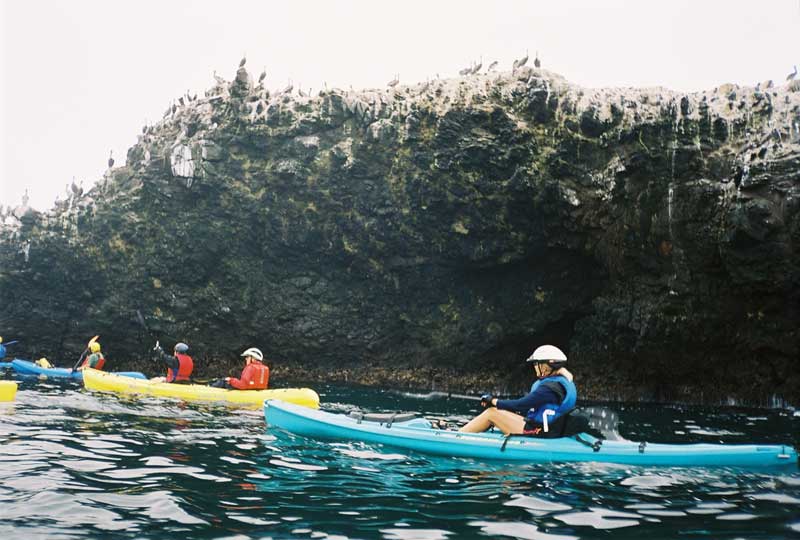
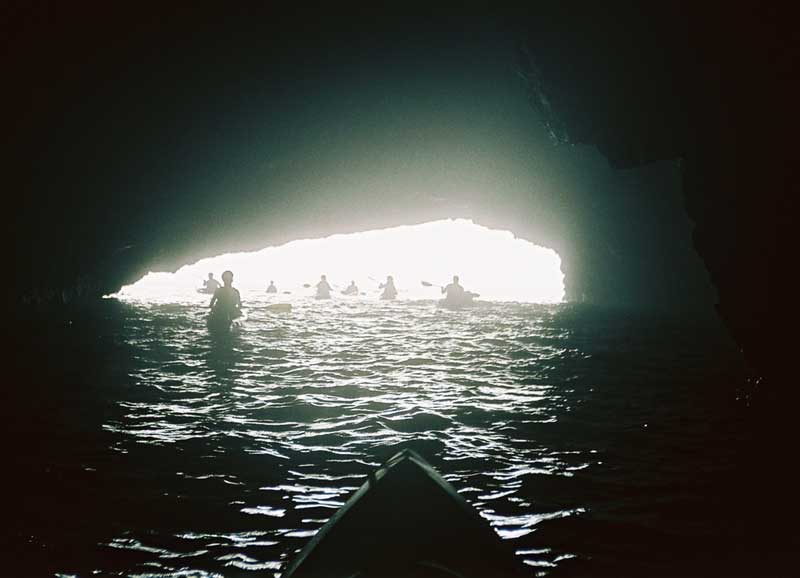
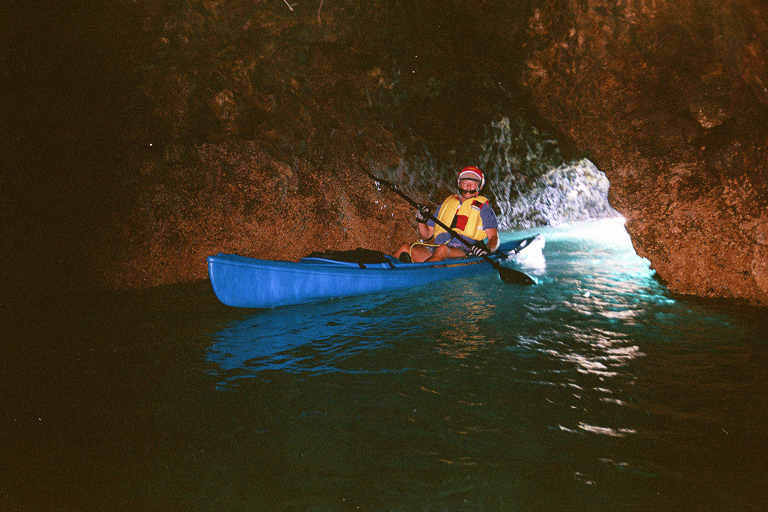 Paula, a friend who we had previously met kayaking in Baja, lives in the Ventura
area and has paddled Channel Islands National Park many times. She offered
to lead us to the caves (providing we wore helmets) and pointed out the trouble
spots. It is such a treat to go with an experienced our guide: apparent dead
ends holes turned out to be long paddleable caves; other tame-looking openings
hid high surge waves and blow holes. Some of us found out early-on that we
needed to to trust her judgment! This compendium
of photos attempts to show what it was like.
Paula, a friend who we had previously met kayaking in Baja, lives in the Ventura
area and has paddled Channel Islands National Park many times. She offered
to lead us to the caves (providing we wore helmets) and pointed out the trouble
spots. It is such a treat to go with an experienced our guide: apparent dead
ends holes turned out to be long paddleable caves; other tame-looking openings
hid high surge waves and blow holes. Some of us found out early-on that we
needed to to trust her judgment! This compendium
of photos attempts to show what it was like.
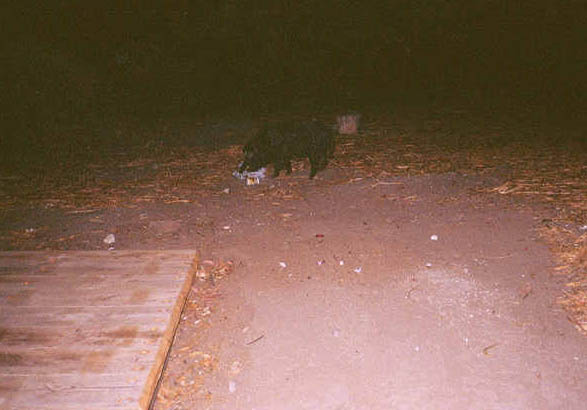
Our late night entertainment was the pigs. We were awakened at 1:30 by the loud scraping of a food box being dragged along the trail. Several of us jumped out of bed and rescued the box with (most of) its contents intact. We made sure that everything else was tied down or stacked high out of reach. No more than 5 minutes after we climbed back in our tents, "he" snuck back into camp and (somehow) removed 2 straps that were securing an ice chest. I poked my head out of the tent just in time to see a very happy pig prancing away with his prize!
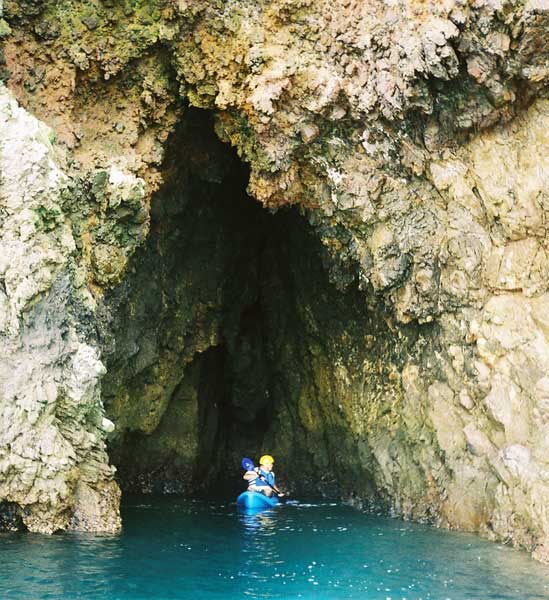 We
liked the island so much that we returned the next year. We again met up with
our Orange County friends and loaded our kayaks onto a boat headed for an
uninhabited island in Channel Islands National Park. Accommodations
there are primitive; we parked our kayaks on a deserted
beach and tent-camped for 4 days.
We
liked the island so much that we returned the next year. We again met up with
our Orange County friends and loaded our kayaks onto a boat headed for an
uninhabited island in Channel Islands National Park. Accommodations
there are primitive; we parked our kayaks on a deserted
beach and tent-camped for 4 days.
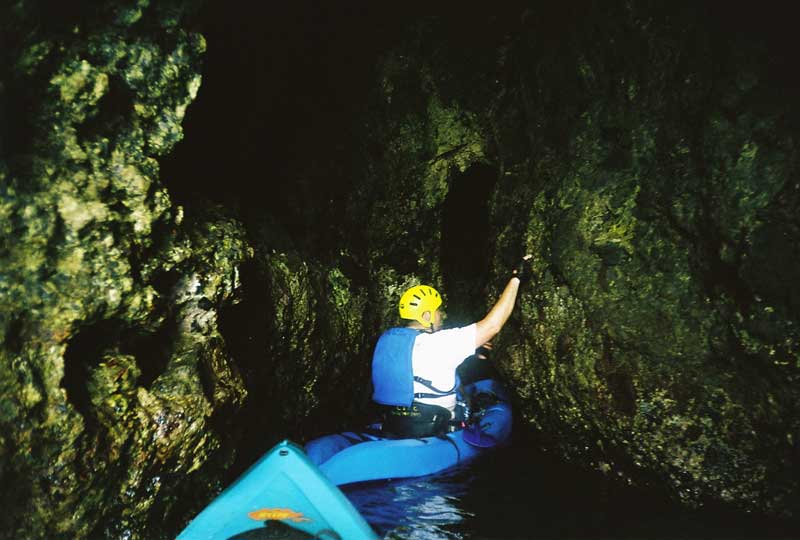
This year the weather was only fair. It was overcast the first day and windy the next. It was downright cold paddling around the islands looking for caves. The old kayaker's saying that "fog is your friend" means there is calm seas and no wind. And calm is good if you plan to paddle through sea caves! Bob was going through a narrow one when a huge sneaker wave came through the entrance behind him and slammed his kayak into the wall with unbelievable force. Fortunately, the nose wedged into a crack and kept the kayak from turning sideways (or end-over-end) and dumping. Manny said Bob looked more surprised than scared!
Because of the turbulence, this year our sea cave photos are lacking. Suffice to say that we found them all and went into most.
 Home Page