 We
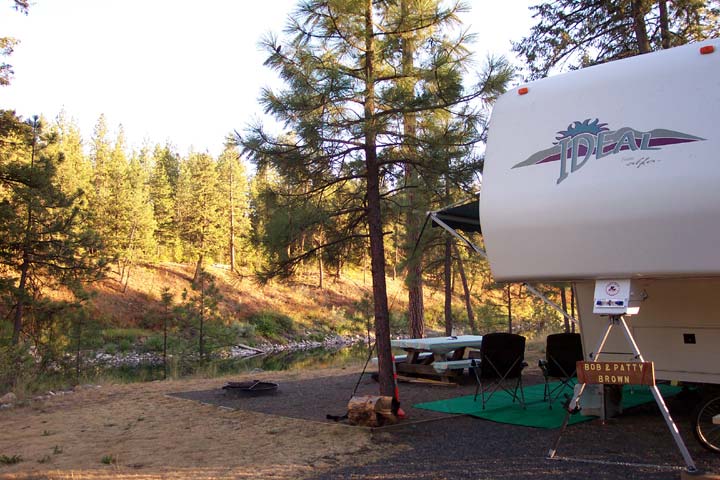
found our volunteer assignment in Spokane to be a real dream. They gave us
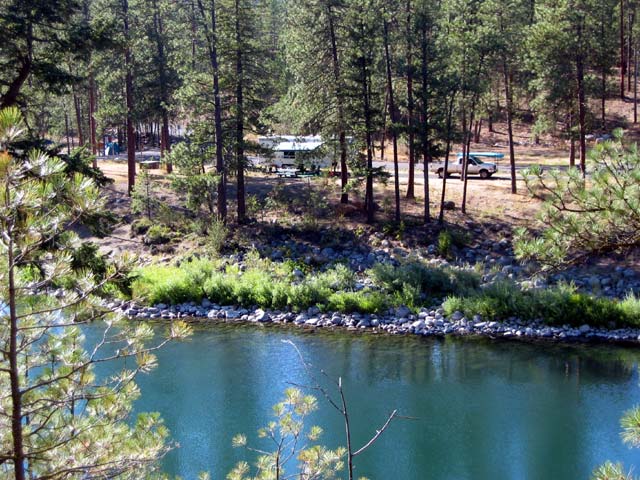
the best campsite in the park; we're living right
on the river, with at least 100 feet between us and any other campers. The
river flowing by our front door is deep and cold; it presents a perfect reflection
in the still air. I put my kayak in the water the first day and ran into rapids
in both directions, 1/4 mile upstream or 1/4 mile
downstream. All I could do was paddle back and
forth between them. Fortunately, there is a dam 6 miles downstream and it
backs the river up into a long narrow lake beginning 2 miles down-river from
us. The still water was more to Patty's liking.
We
found our volunteer assignment in Spokane to be a real dream. They gave us
the best campsite in the park; we're living right
on the river, with at least 100 feet between us and any other campers. The
river flowing by our front door is deep and cold; it presents a perfect reflection
in the still air. I put my kayak in the water the first day and ran into rapids
in both directions, 1/4 mile upstream or 1/4 mile
downstream. All I could do was paddle back and
forth between them. Fortunately, there is a dam 6 miles downstream and it
backs the river up into a long narrow lake beginning 2 miles down-river from
us. The still water was more to Patty's liking.
 Our
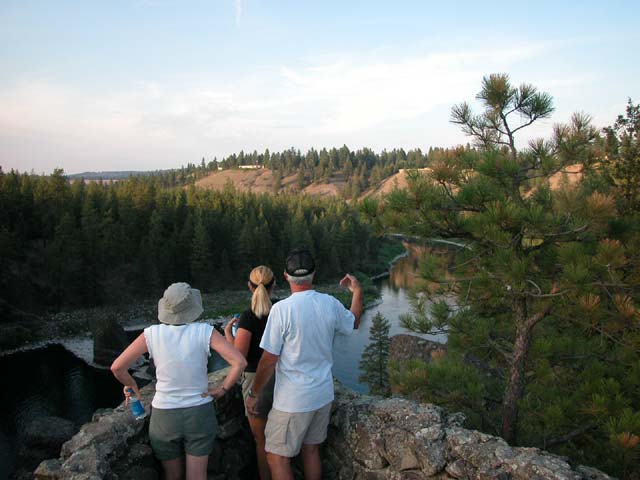
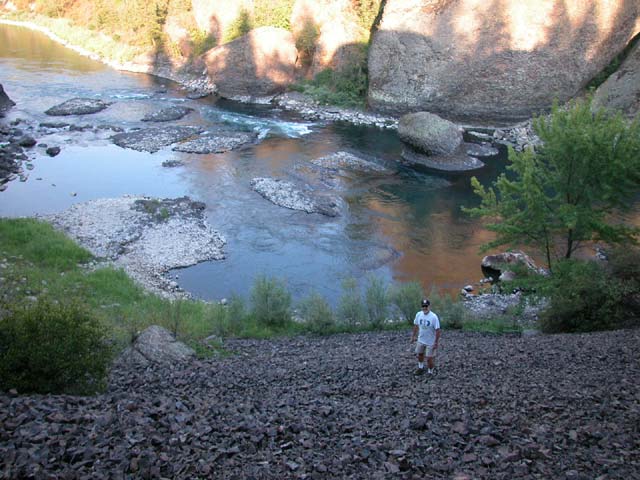
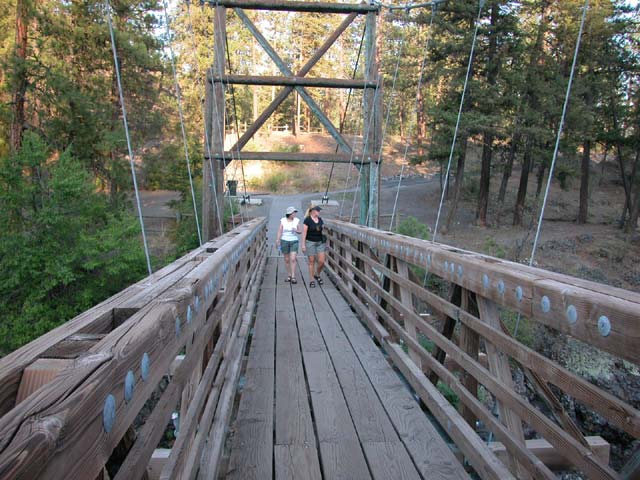
good friends, Ben & Marcie, visited us from Southern California. We introduced
them to our park with a short hike along the river
and through the lava flows. The weather turned HOT
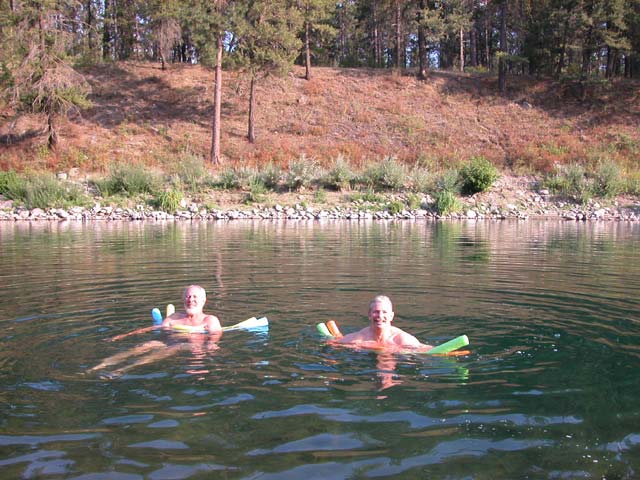
during their stay, and floating in the river (on our newly purchased water
noodles) made the COLD water seem almost comfortable. Ben was thrilled
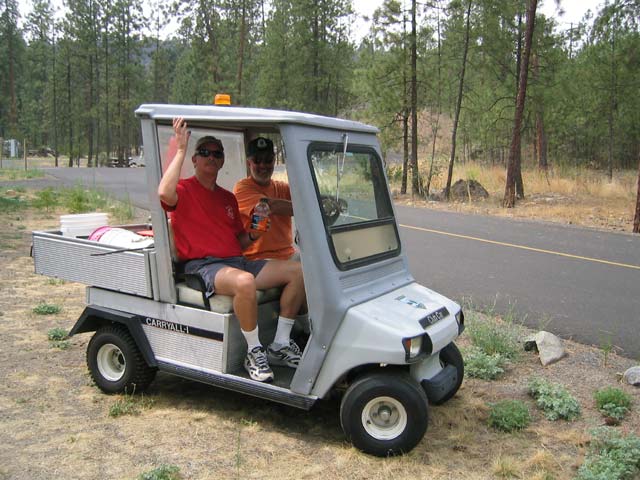
with the opportunity to accompany Bob on his rounds
and use the litter picker-upper. "Neatenizing" for Ben will never
be the same!
Our
good friends, Ben & Marcie, visited us from Southern California. We introduced
them to our park with a short hike along the river
and through the lava flows. The weather turned HOT
during their stay, and floating in the river (on our newly purchased water
noodles) made the COLD water seem almost comfortable. Ben was thrilled
with the opportunity to accompany Bob on his rounds
and use the litter picker-upper. "Neatenizing" for Ben will never
be the same!
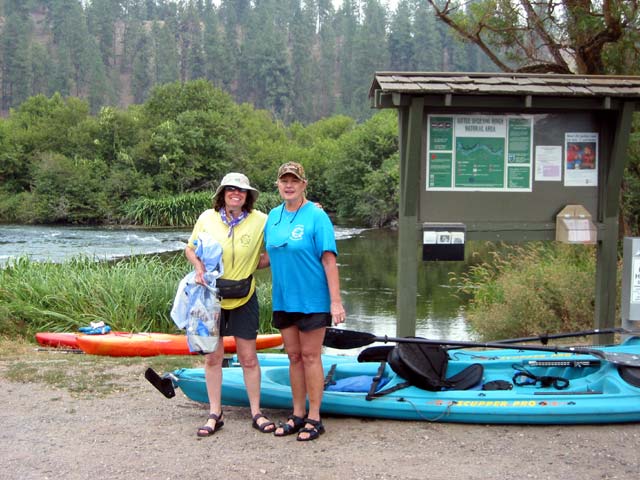
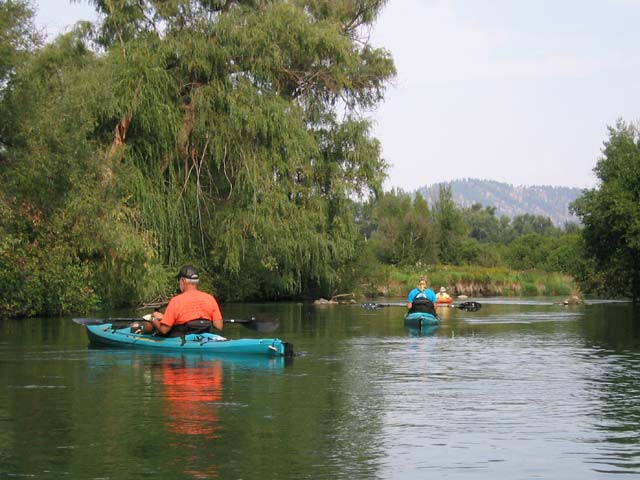 Considering
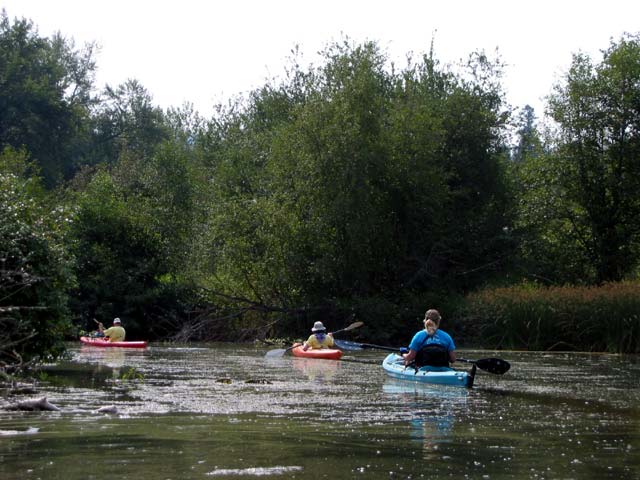
the heat, the best excursion that we took them on was a 7 mile paddle through
the designated natural area on the Little Spokane
river. They rented kayaks from the local REI and
we set up a car shuttle so we could do it one-way. The current was fairly
swift so that the only real paddling we had to do
was to steer around snags and tree branches. Patty put her paddle down to
take a picture and the current quickly swept her into a tree where the low
branches lifted the kayak up and turned it over. There's a difference between
an "eek" and a "scream"! We looked back to see her in
the water (with her camera still around her neck). She survived; the camera
didn't. She told us that the water didn't feel as cold when you went in "with
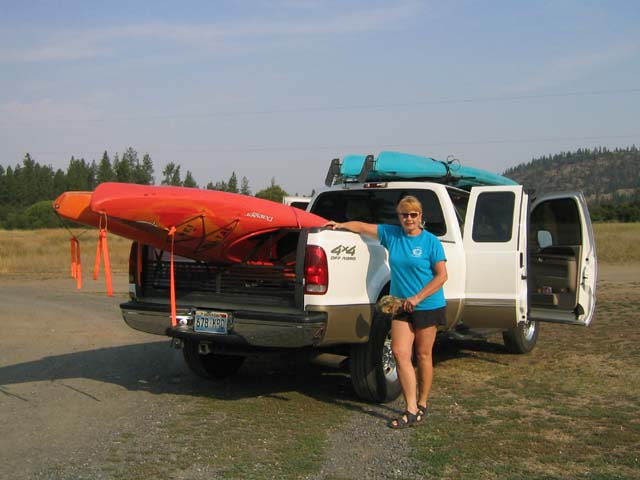
other things on your mind". She posed with Marcie at the take-out point,
still looking a bit on the wet side.
Considering
the heat, the best excursion that we took them on was a 7 mile paddle through
the designated natural area on the Little Spokane
river. They rented kayaks from the local REI and
we set up a car shuttle so we could do it one-way. The current was fairly
swift so that the only real paddling we had to do
was to steer around snags and tree branches. Patty put her paddle down to
take a picture and the current quickly swept her into a tree where the low
branches lifted the kayak up and turned it over. There's a difference between
an "eek" and a "scream"! We looked back to see her in
the water (with her camera still around her neck). She survived; the camera
didn't. She told us that the water didn't feel as cold when you went in "with
other things on your mind". She posed with Marcie at the take-out point,
still looking a bit on the wet side.
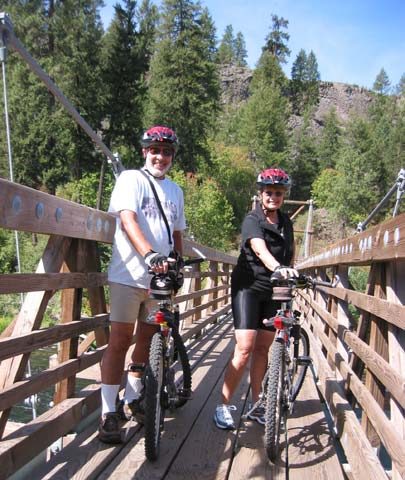
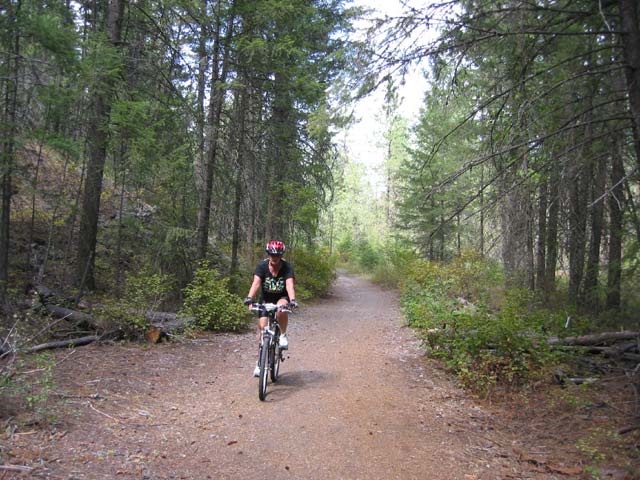 There
are miles and miles of bike trails along the river. Within easy riding distance
from our campground there are at least 25 miles of single-track and mountain
bike roads. We ended up riding somewhere almost every
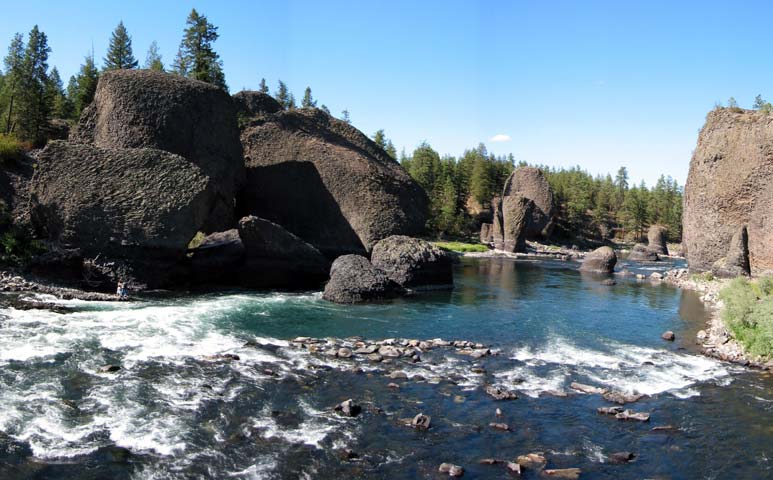
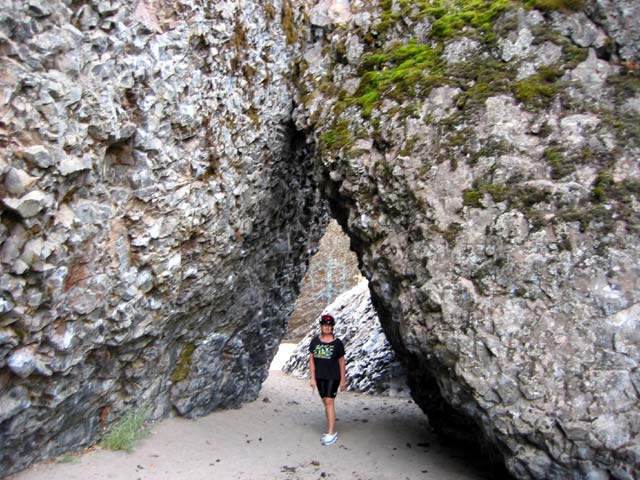
day. One of our favorite rides took us to a narrow canyon called Deep Creek
that has been cut through the lava. It was a maze of (slippery) rocks to climb
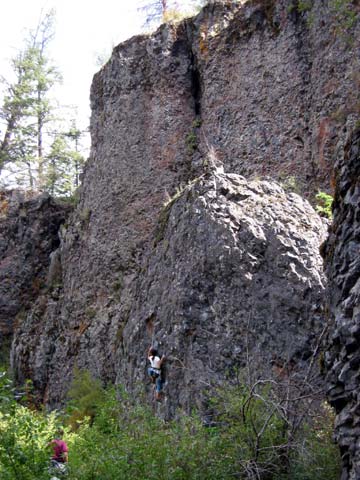
over, under and through. We saw climbers
in the area and wondered if the rocks above were as slippery as the rocks
we were scrambling over.
There
are miles and miles of bike trails along the river. Within easy riding distance
from our campground there are at least 25 miles of single-track and mountain
bike roads. We ended up riding somewhere almost every
day. One of our favorite rides took us to a narrow canyon called Deep Creek
that has been cut through the lava. It was a maze of (slippery) rocks to climb
over, under and through. We saw climbers
in the area and wondered if the rocks above were as slippery as the rocks
we were scrambling over.
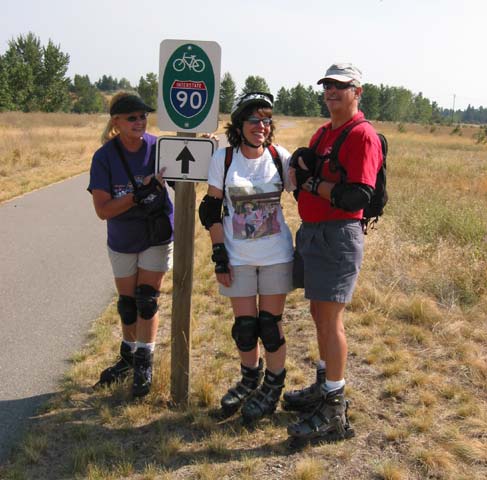
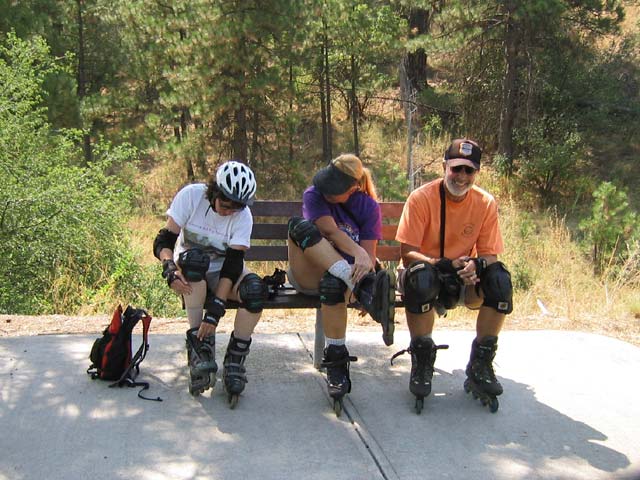
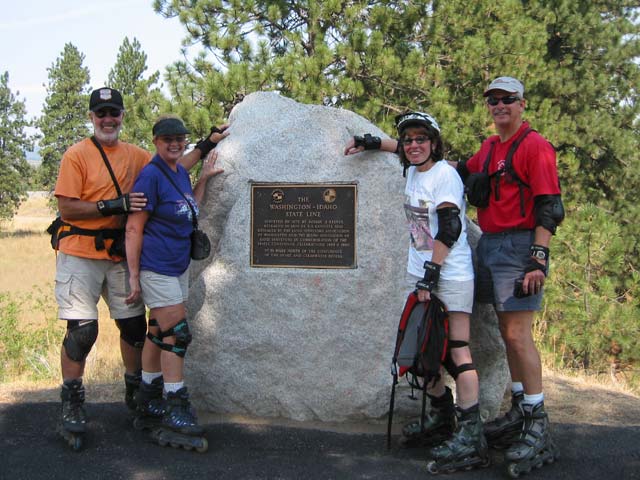
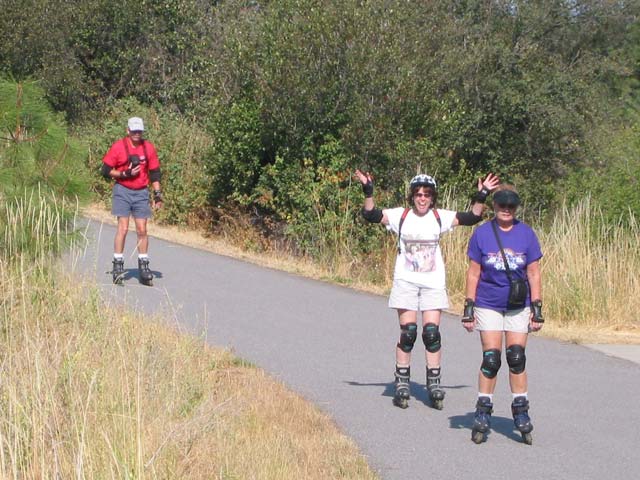
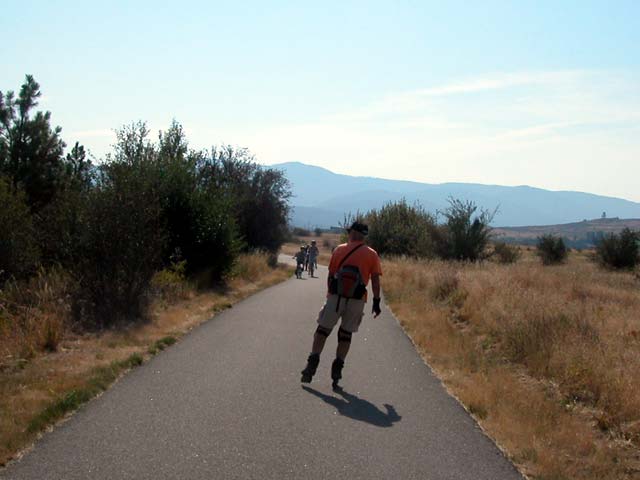 We're
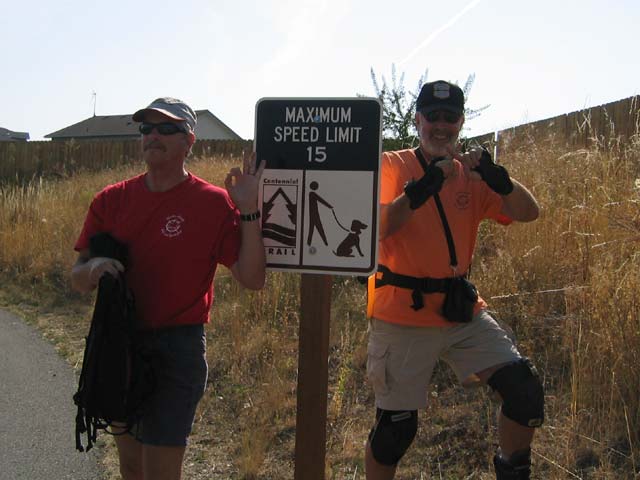
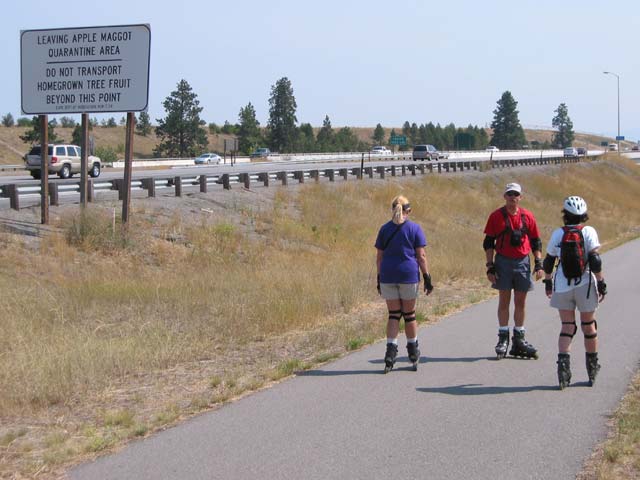
also about a mile from the paved Centennial Bike Trail.
It runs for 37 miles, beginning at the dam 7 miles down-river from us and
continuing all the way upriver to the Idaho border. The section nearest the
campground is pretty hilly but there is a flat, smooth section about 15 miles
upstream. We waited for Ben & Marcie to get here before donning
our skates and heading for Idaho. We put in at the
6.5 mile marker (they made me include the "point five") and skated
to the border and back. Bob and Ben had a different perspective
on the trail rules, and there were some lines that Ben just refused
to cross!
We're
also about a mile from the paved Centennial Bike Trail.
It runs for 37 miles, beginning at the dam 7 miles down-river from us and
continuing all the way upriver to the Idaho border. The section nearest the
campground is pretty hilly but there is a flat, smooth section about 15 miles
upstream. We waited for Ben & Marcie to get here before donning
our skates and heading for Idaho. We put in at the
6.5 mile marker (they made me include the "point five") and skated
to the border and back. Bob and Ben had a different perspective
on the trail rules, and there were some lines that Ben just refused
to cross!
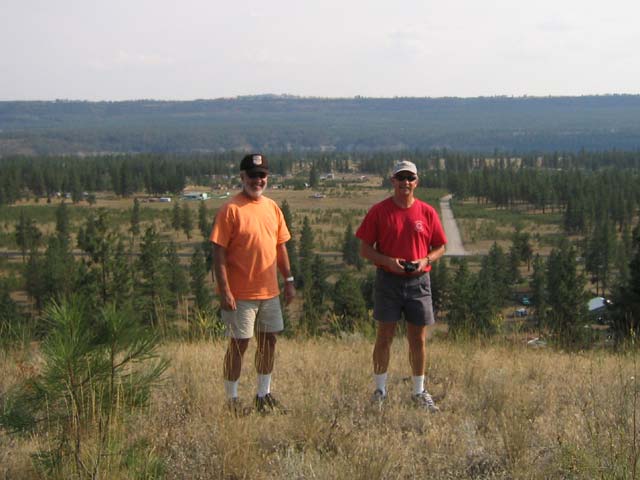
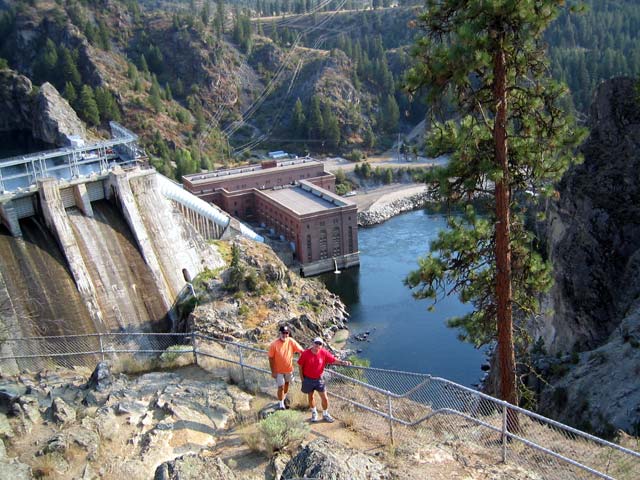
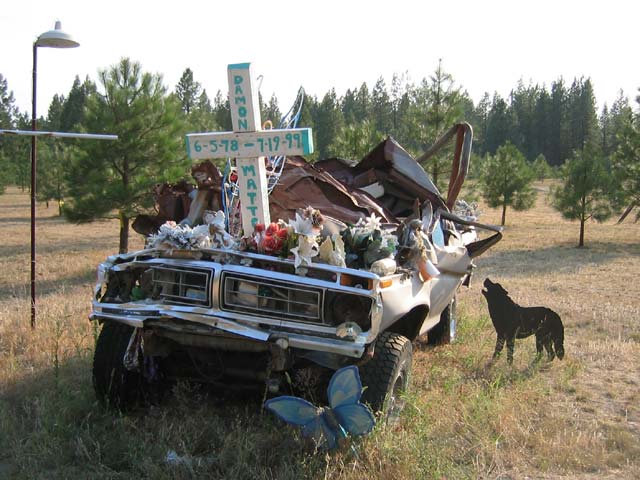
Ben has owned property in this area for 30 years or more; he may have been holding it as a possible retirement home. It is a 7 acre view lot, 350 feet above the Long Lake dam. The neighborhood, however, appears to be a bit on the redneck side (as evidenced by the caliber of their "Art in Public Places" program). Every house had a half dozen old cars up on blocks in the front yard. We suspect that the two of them had widely divergent views on how the property would look with a house on it.
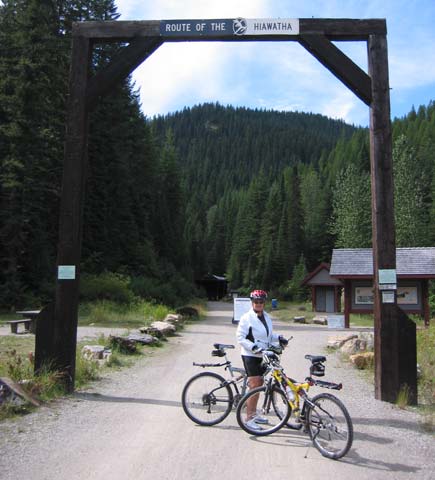
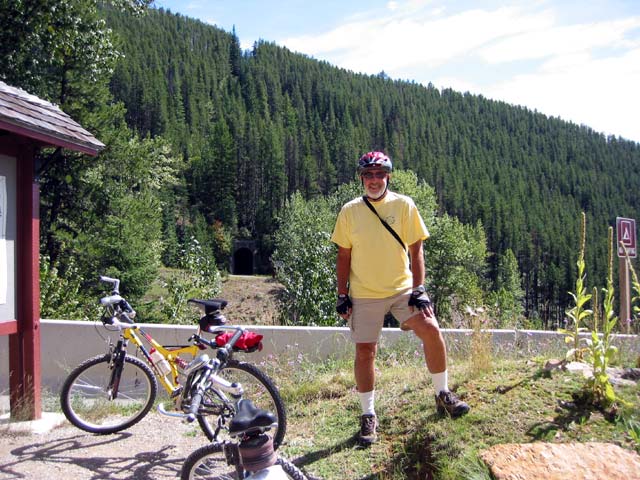 We
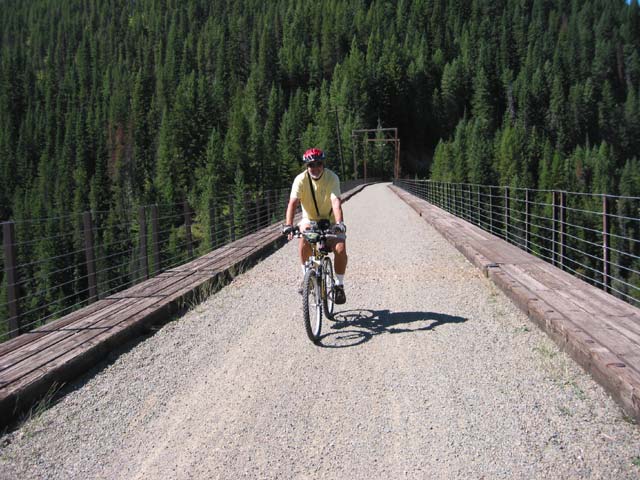
saved the best for last. Several friends had told us about a 15 mile bike
trail called the Route of the Hiawatha. It is an abandoned
railroad bed that has been bladed to give it a hard dirt surface (we've
been on other abandoned rail beds that couldn't be ridden because of the deep
gravel). The ride begins in Montana and ends in Idaho, passing through some
of the most remote country you'll ever see. It
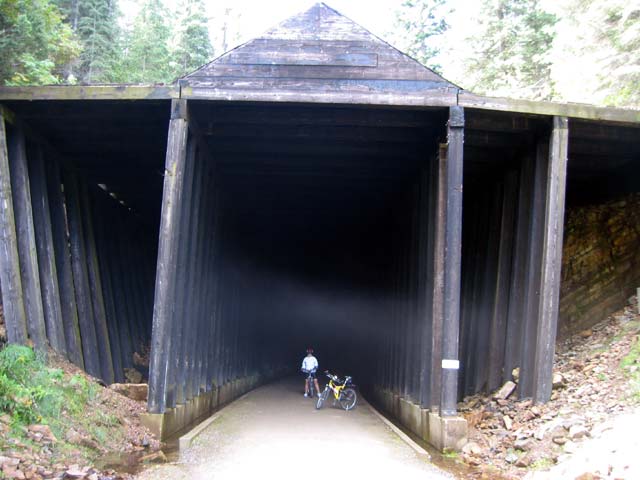
starts out with a 1.6 mile tunnel that is quite
intimidating. As if riding a bike almost two miles in the pitch black isn't
ominous enough, the deafening sound of dripping/running
water all around makes it all the more eerie. The route passes through
10 tunnels and lights are absolutely essential in all but two of them. It
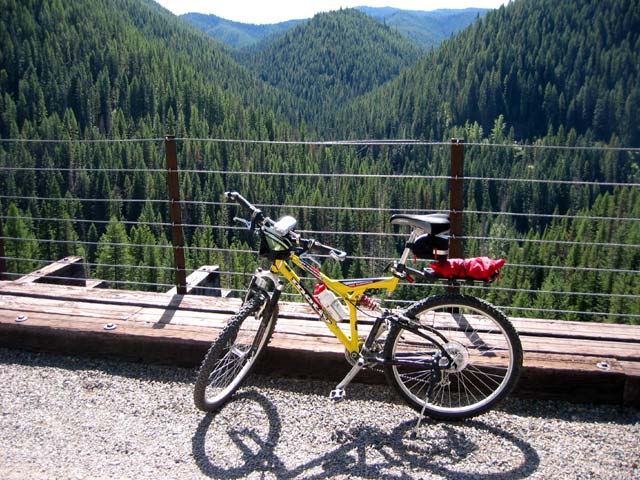
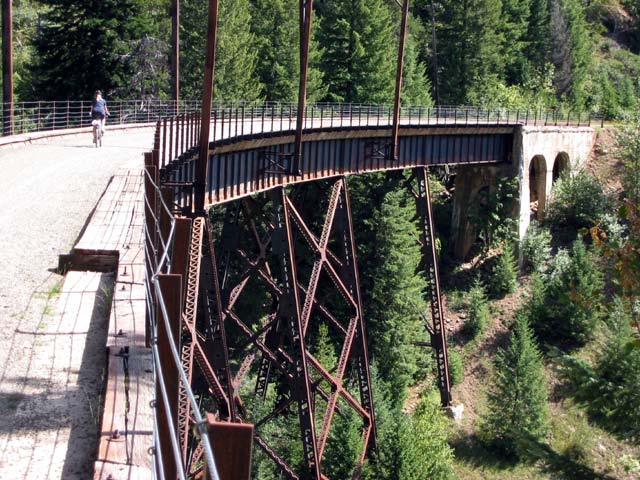
also crosses 7 trestles ranging from 120' to 220' high
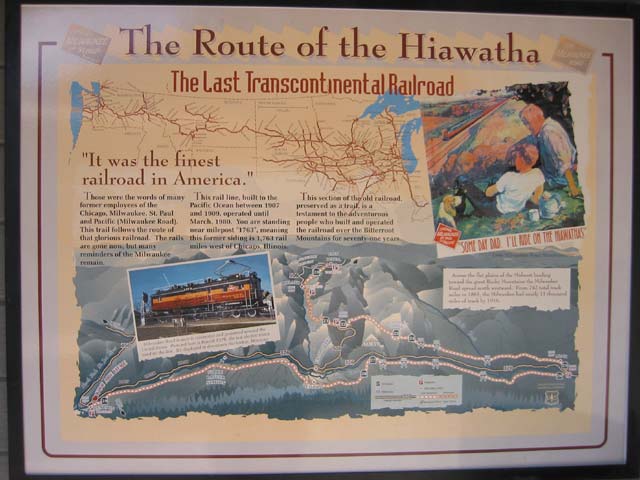
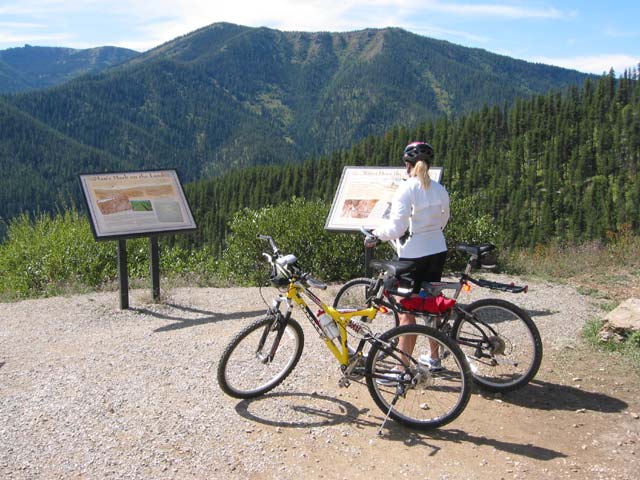
and 500' to 800' long. The trail is very well done
with truly interesting interpretive signs every
quarter mile or so. This has to be the most scenic Rails to Trails park in
the entire system.
We
saved the best for last. Several friends had told us about a 15 mile bike
trail called the Route of the Hiawatha. It is an abandoned
railroad bed that has been bladed to give it a hard dirt surface (we've
been on other abandoned rail beds that couldn't be ridden because of the deep
gravel). The ride begins in Montana and ends in Idaho, passing through some
of the most remote country you'll ever see. It
starts out with a 1.6 mile tunnel that is quite
intimidating. As if riding a bike almost two miles in the pitch black isn't
ominous enough, the deafening sound of dripping/running
water all around makes it all the more eerie. The route passes through
10 tunnels and lights are absolutely essential in all but two of them. It
also crosses 7 trestles ranging from 120' to 220' high
and 500' to 800' long. The trail is very well done
with truly interesting interpretive signs every
quarter mile or so. This has to be the most scenic Rails to Trails park in
the entire system.
 Home Page